
Kyoto is full of can’t-miss sights, hidden gems, and world-renowned dining. After 2 visits, we’re sharing the very best things to do in Kyoto, including the most popular attractions and the secrets you won’t find in most guidebooks.
We’ve been to Kyoto twice now and we’re still not sure we’ve even scratched the surface. That’s the thing about this city: it reveals itself slowly, and every visit feels different.
Kyoto is considered the cultural capital of Japan, and with more than 400 Shinto shrines, 1,600 temples, and 17 UNESCO World Heritage Sites, it’s easy to see why. But the statistics only tell part of the story.
What keeps drawing us back is the feeling of the place: the lantern-lit lanes of Gion, the quiet of Higashiyama in the early morning, the way the Fushimi Inari gates seem to go on forever. Kyoto feels like a completely different country than hi-tech Tokyo or fast-paced Osaka.
Whether it’s your first trip to Japan or your fifth, Kyoto has a way of surprising you. These are the things to do in Kyoto that we’d recommend from our own personal experience, and the ones we’re already planning for a third visit.
Our favorite things to do in Kyoto
If you’re looking for the very best things to do in Kyoto, here are our top recommendations:
Want more ideas? Well, you are in for a treat!
In this article, we’re sharing the very best things to do in Kyoto, as well as where to eat and insider tips, to make your visit to this Japanese gem truly wonderful.
Kyoto travel guide
For more tips and advice for planning your trip to Kyoto, jump to the following sections (or just keep scrolling to see it all!).
- How many days do you need?
- Where to eat in Kyoto
- Best time to visit Kyoto
- Tips for avoiding crowds
- How to get to Kyoto
- Getting around Kyoto
- Where to stay in Kyoto
Psst! Our Kyoto Itinerary has 4 fully-planned, interchangeable days that hit the iconic sights and the hidden gems most tourists miss. All done for you. Just show up. Find out more about the Kyoto Itinerary →
1. Visit Fushimi Inari Shrine
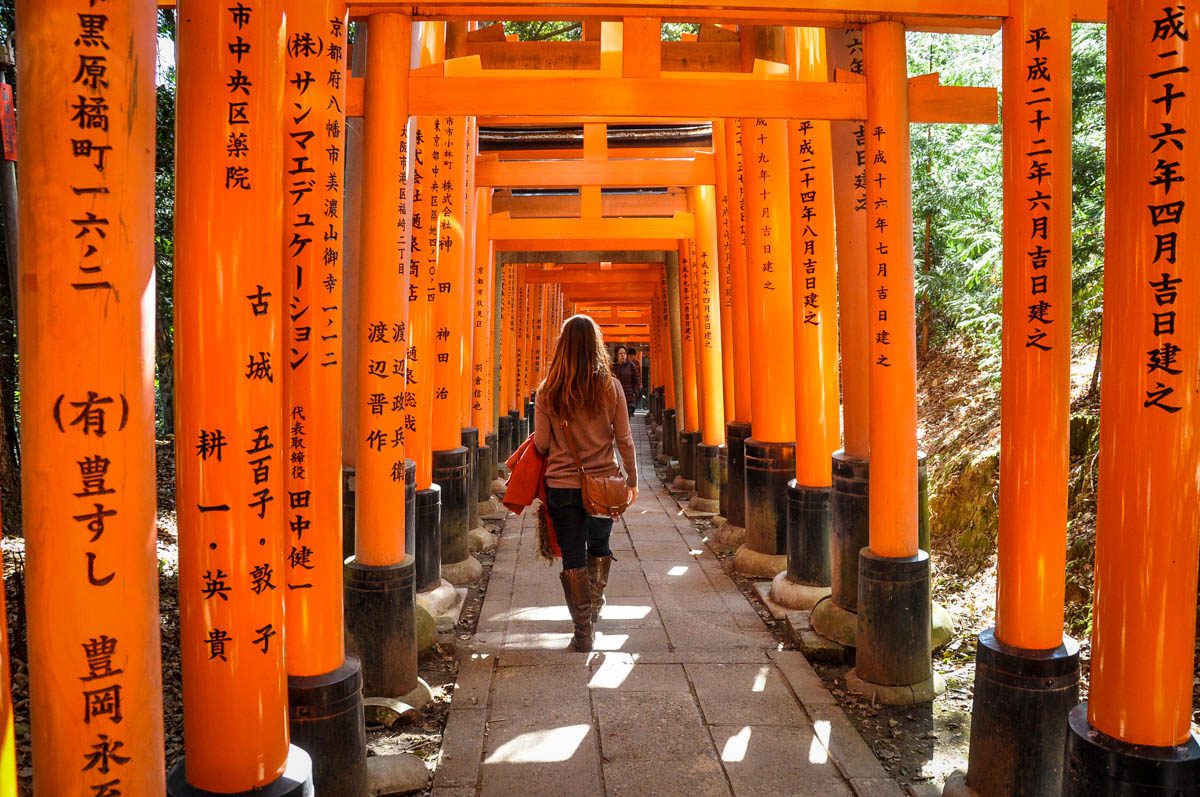
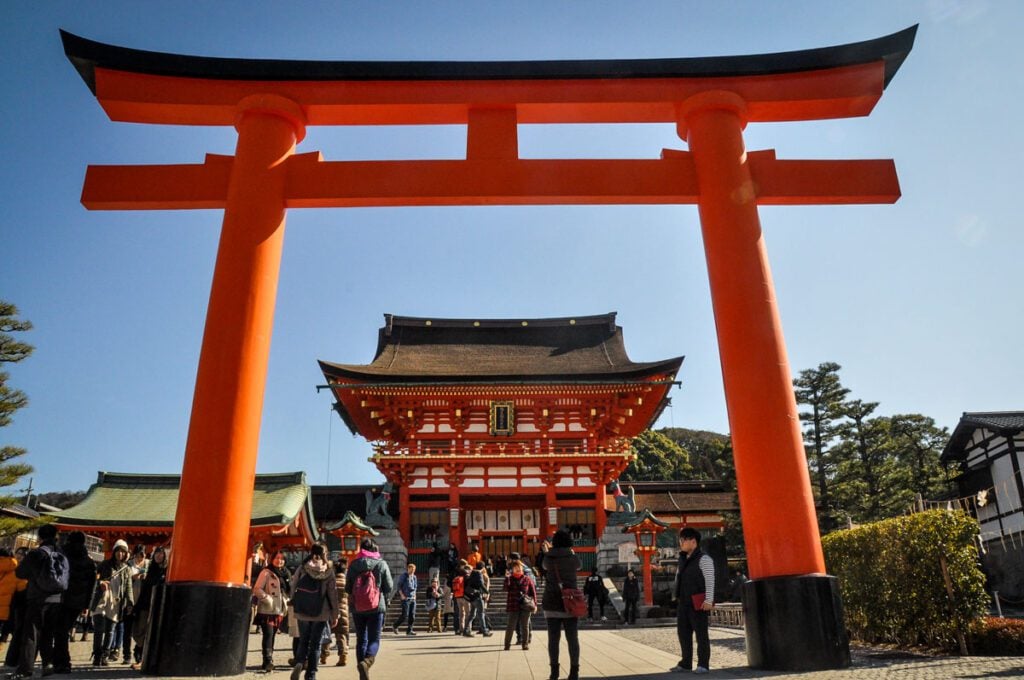
These iconic orange gates are one of the most symbolic sights in Japan and one of the best things to see in Kyoto.
While it is (very) popular, Fushimi Inari is still absolutely worth visiting.
Follow the pathway beneath thousands of orange-painted gates as the sunlight streams through the spaces between them. It is truly a magical experience that we can’t quite describe.
Featuring more than 10,000 orange torii gates, Fushimi Inari is a shrine dedicated to Inari, the Shinto god of rice.
There are some 30,000 shrines devoted to Inari around Japan, but Fushimi Inari is the most well-known and most important of them all.
Tips for visiting Fushimi Inari
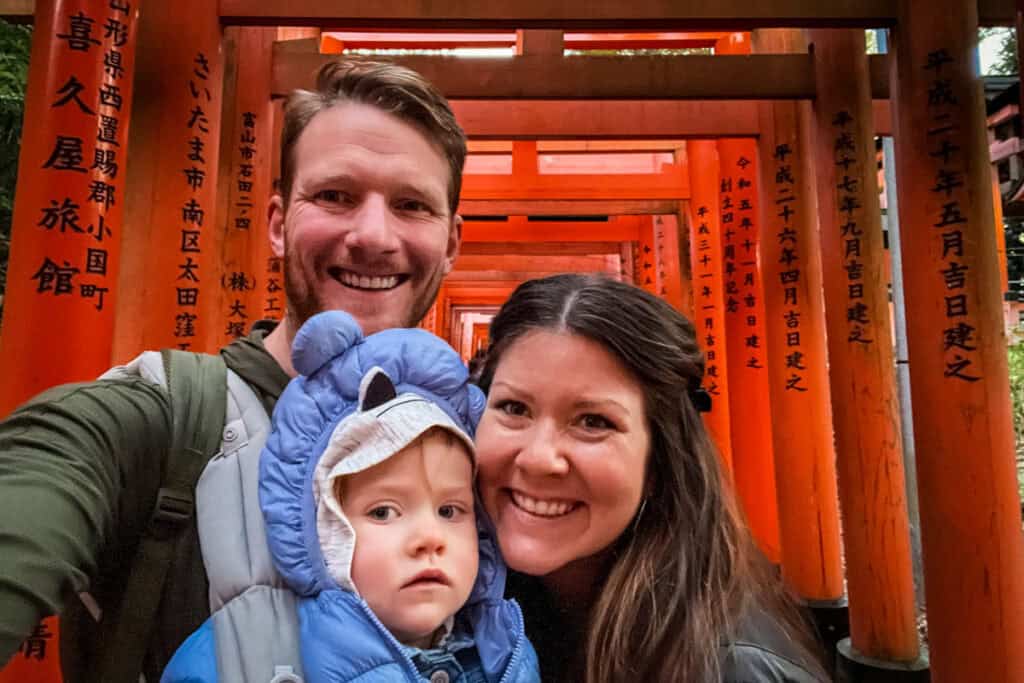
We have a detailed guide to help you plan the perfect visit to Fushimi Inari Shrine, but here are a few tips to get you started:
- There is no entry fee, making Fushimi Inari one of the best free things to do in Kyoto.
- Since Fushimi Inari gets crowded, try to get here as early as possible.
- There is a shrine mid-way where you can write a wish on a small wooden fox “ornament” to hang with the thousands of others that have been left.
- If you follow the entire pathway through the torii, it is roughly 2.8 miles (4.5 km) in total. You can do all or part of the walk, but it’s good to know that there is a moderate incline (550 feet / 168 meters).
- Along the way, you will be rewarded with panoramic views over Kyoto.
Want a local to show you around Fushimi Inari? This guided tour earns rave reviews!
2. Explore the Higashiyama Historic District
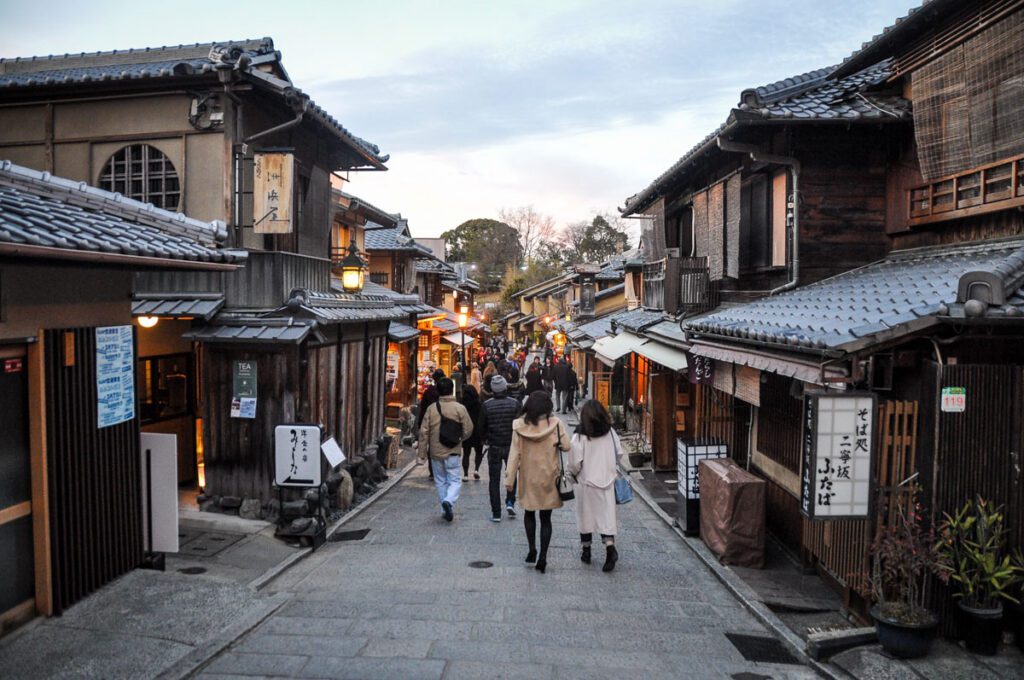
The Higashiyama district is perhaps the best preserved part of Kyoto and gives visitors a feeling of traveling back in time.
In recent years, there has been an effort to remove telephone poles and repave the pedestrian road to reflect what it truly looked like in the past.
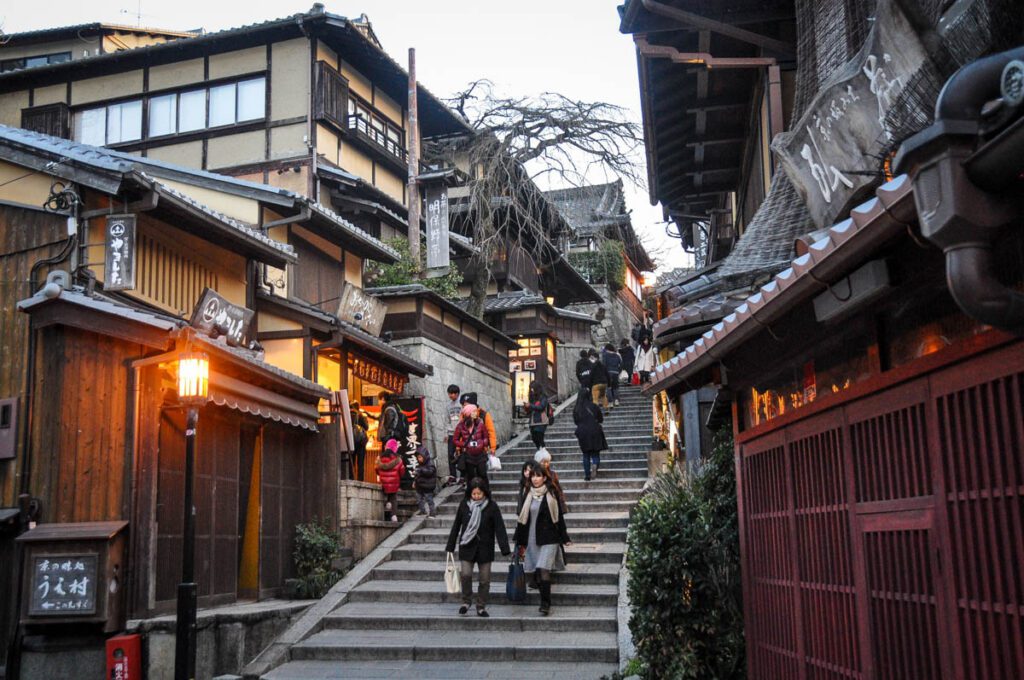
Stroll along Ninenzaka, a pedestrian road that spans this district, and get a glimpse of history as you pass by traditional wood shops, cafes and restaurants.
While one of the most beautiful neighborhoods in Kyoto, Higashiyama also gets very crowded. For that reason, we’d recommend getting here in the early morning hours.
Top sights in Higashiyama Historic District
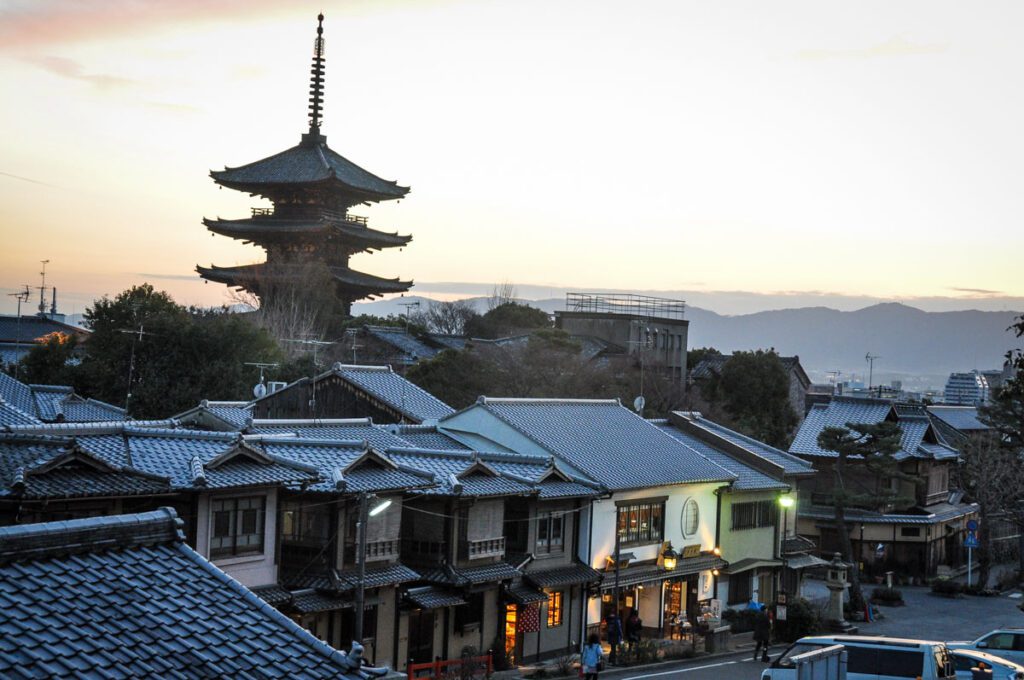
- Yasaka Pagoda: this landmark is a popular photo op in the area
- Ninenzaka road: paved pedestrian street that is one of our favorite places to get souvenirs in Japan
- Ninenzaka Stairs: located along the pedestrian street, this set of stairs is a particularly beautiful spot
- Yasaka Shrine: Shinto shrine from 656 A.D.
- Kiyomizudera Temple: perched atop a small mountain on the east side of Kyoto, this temple offers great views over the city and is a UNESCO World Heritage Site
- Maruyama Park: famous as one of the best places to see cherry blossoms in the country, this park is centrally located
- Kodaiji Temple: beautiful temple with a bamboo grove
3. Take a Japanese food tour with a local
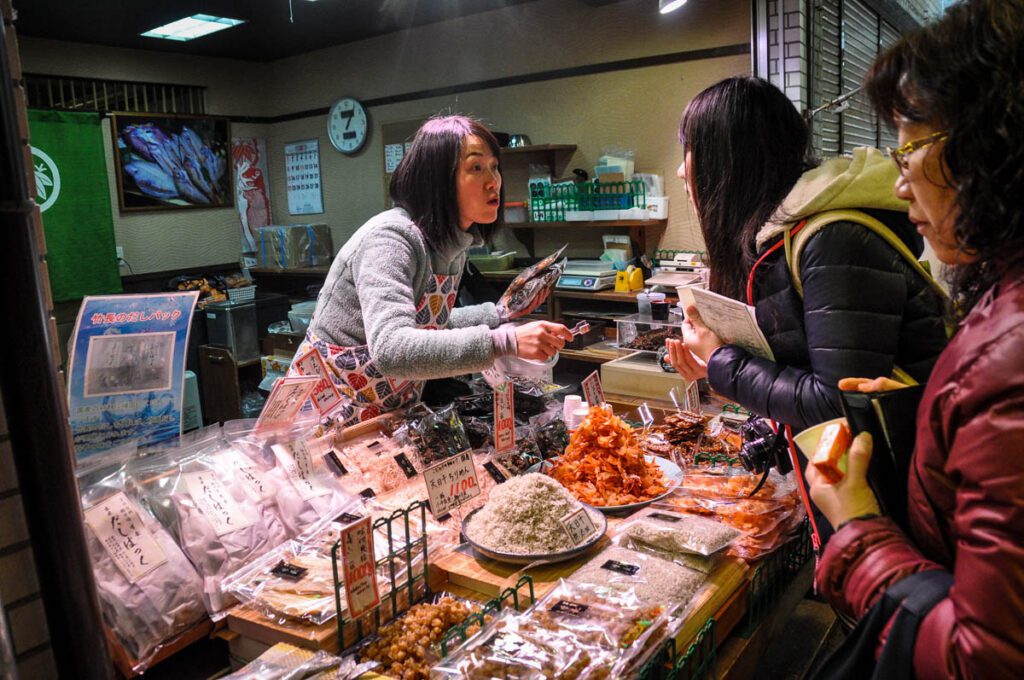
We’re obsessed with food tours and have done two in Japan alone, one in Tokyo and one in Osaka. Both were incredible, and honestly some of our favorite memories from the whole trip.
A good food tour does two things: it introduces you to dishes you never would have found on your own, and it gives you a real window into the local culture. Japanese cuisine is so much more than sushi and ramen, and Kyoto has its own regional specialties that are absolutely worth seeking out.
This foodie night tour is the one we’d recommend for Kyoto. You’ll wander downtown with a local guide, sampling dishes at several tucked-away spots that most tourists walk right past. Past guests sum it up better than we can:
“Such an amazing tour with a fun and knowledgeable host. Took us to several amazing tucked away places that there is no way we ever would have gotten to experience or even know about on our own.” – Carrie, January 2023
4. Sample Japanese snacks at Nishiki Market
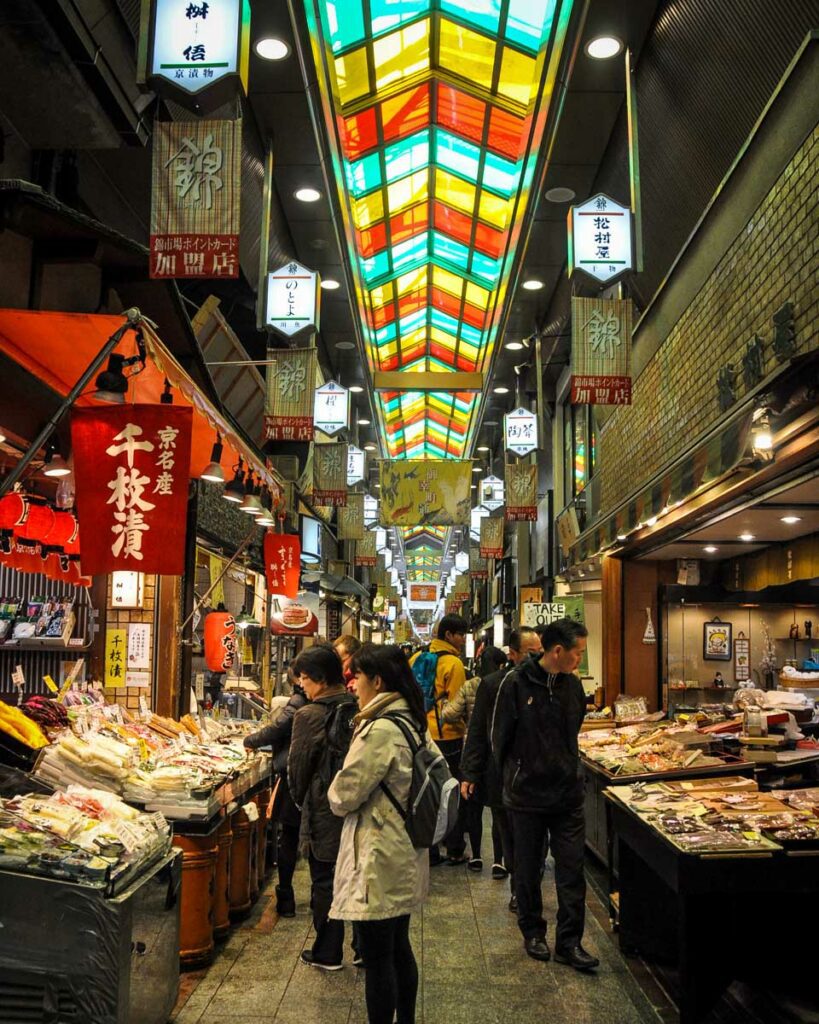
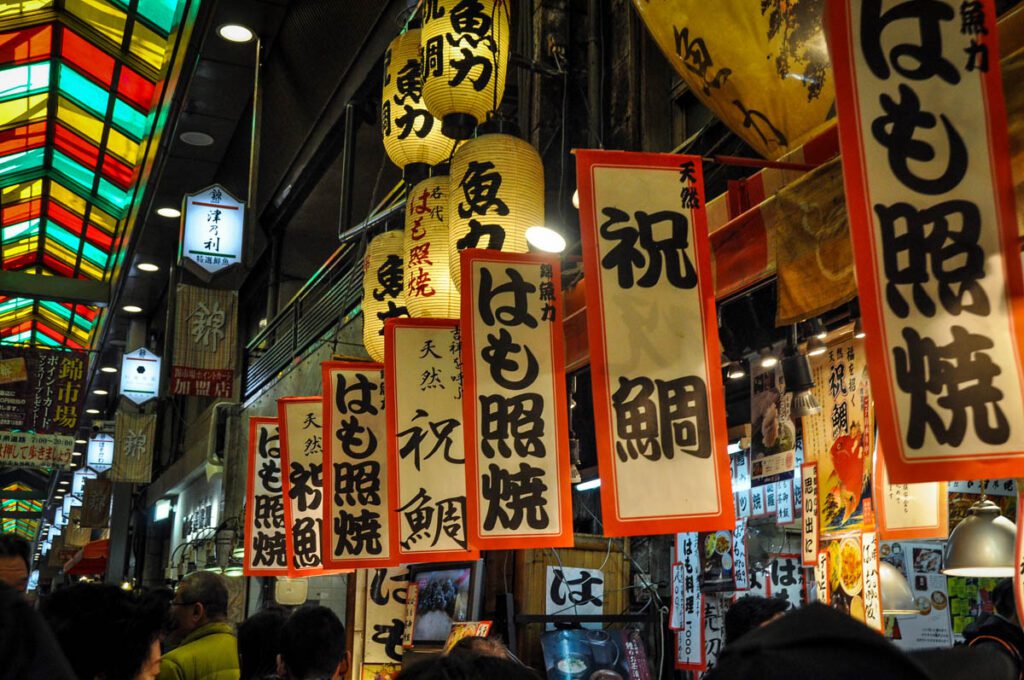
Nicknamed “Kyoto’s kitchen,” Nishiki Market is one of the best places in the city to sample the local cuisine and see where locals shop.
This 5-block-long marketplace is more than 400 years old and houses more than 100 different stalls.
Nishiki Market is narrow yet bustling with vendors offering samples and selling spices used in Japanese cooking, sweets, traditional snacks, fresh seafood, produce, and other goods, like knives and cooking utensils.
Snacks to try in Nishiki Market
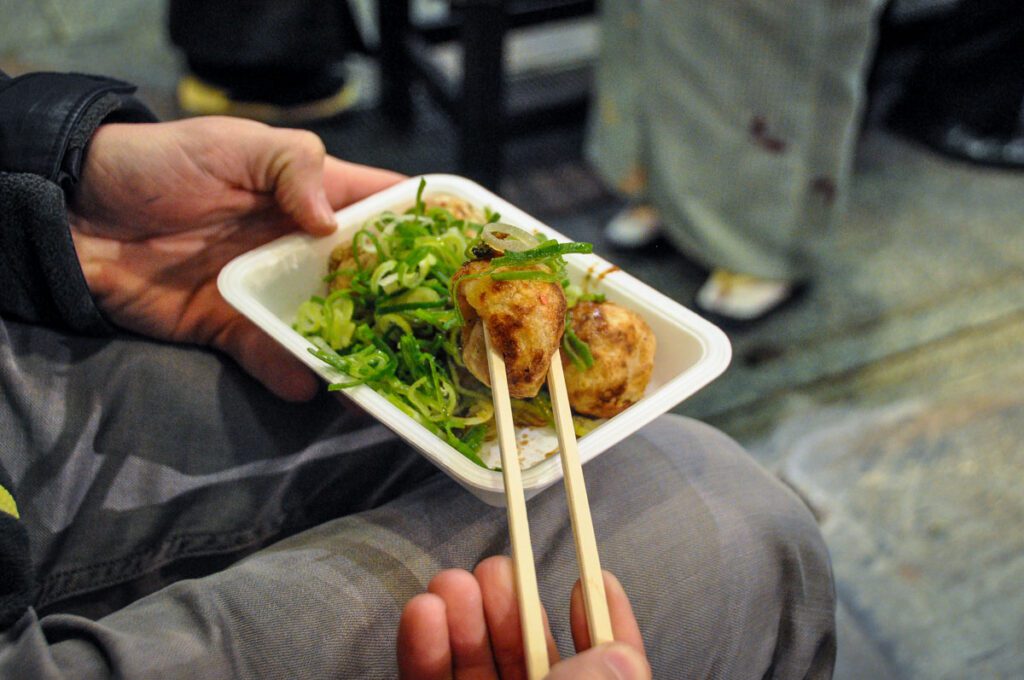
Nishiki Market is a great place to try these Japanese and Kyoto-specific specialties:
- Tako tamago: candied baby octopus stuffed with a boiled quail egg inside its head; this sweet and salty snack is one of the most famous bites to try in Nishiki Market
- Goma dango: these sesame dumplings are chewy and come in a few different colors and flavors.
- Pickled vegetables: you’ll see barrels of pickled vegetables that you can purchase to bring home or snack on.
- Wagashi: beautiful Japanese sweets that are often served at tea ceremonies. These make great souvenirs to bring home and share with family and friends.
Want local insight? Wander Nishiki Market with a local who can tell you the ins and outs of this place, its history, and its importance in Japanese culture.
5. Explore Nijo Castle
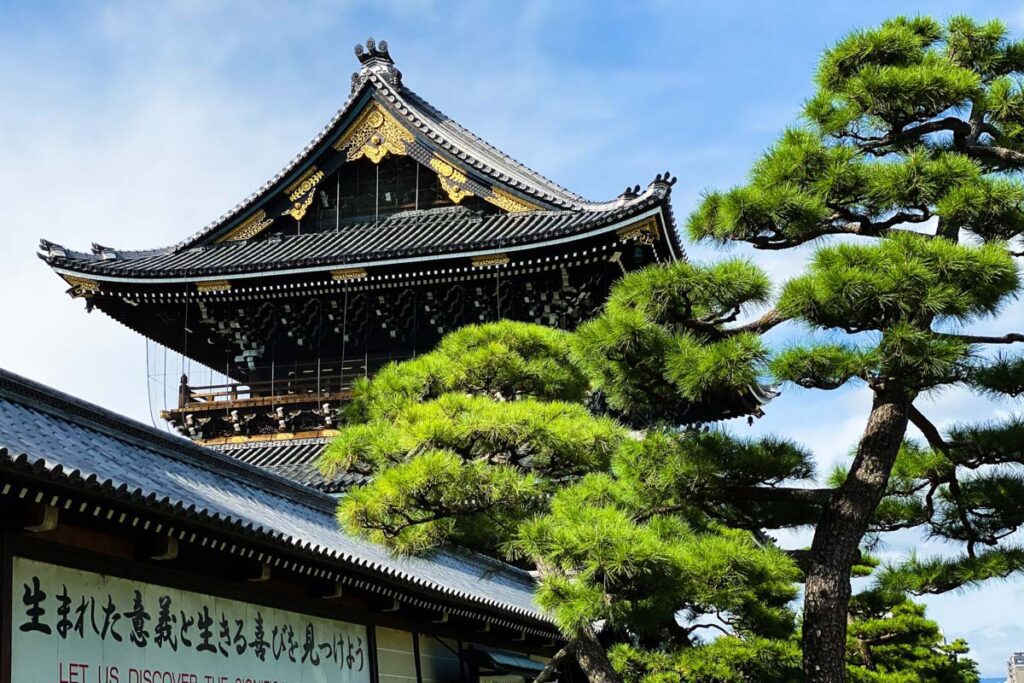
- Entry fee: 800 yen ($6) an additional 500 yen ($4) to enter the Ninomaru Palace
Nijo Castle is one of the most significant castles in Japan, and walking through it gives you a real sense of just how much power shoguns (warlords) held over emperors during the Edo Period. The 17th century architecture is stunning, with intricate wood carvings and decorative panels around every corner, but it’s the history behind it all that makes it so compelling.
Pick up an audio guide on your way in; it adds a lot of context about the Edo Period, the famed artists behind the details, and the political drama that played out within these walls.
Insider tip: Visit this castle right after it opens to ditch the crowds and roam the grounds peacefully.
6. Participate in a tea ceremony
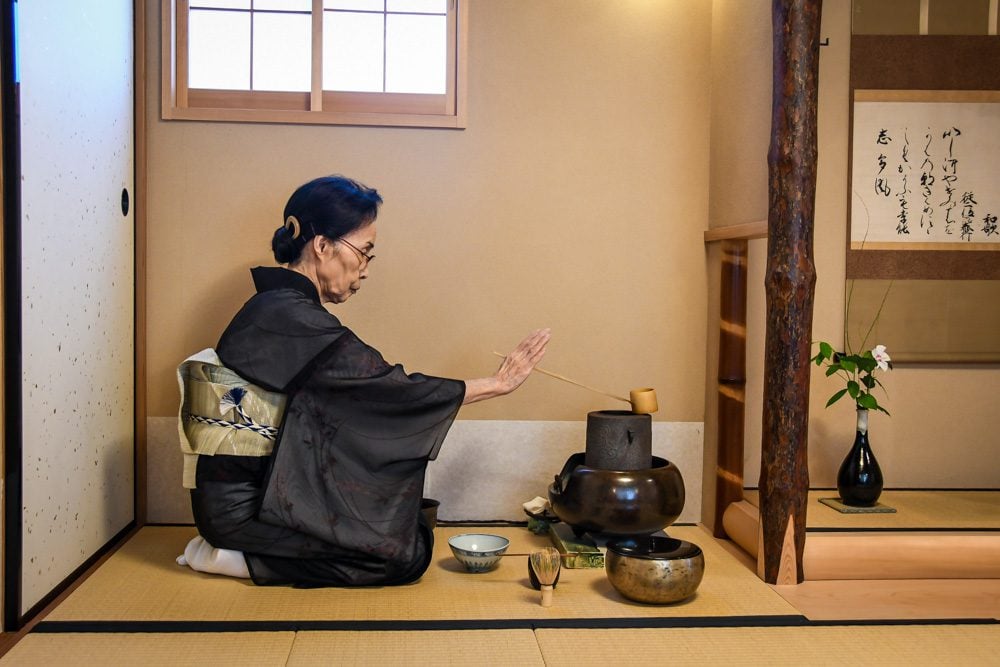
Tea ceremonies have been an inseparable part of Japan’s culture since the 13th century.
The Jku-An at Jotokuji Temple tea ceremony is the perfect way to immerse yourself in a traditional chanoyu ceremony sampling the finest matcha tea.
Slip your shoes off at the door and begin your journey through the main cultural symbol of Japan.
Your tea master will guide you through each step of the ceremony, explaining how to prepare and drink the matcha, as well as the importance of the ceremony.
“Highly recommend! The host gave a joyful introduction into true Japanese tea ceremony. She is very fluent in English, so it was easy to understand her and to ask any questions. The atmosphere was relaxing and the tea house is very beautiful and appropriate.” -Guest review, September 2019
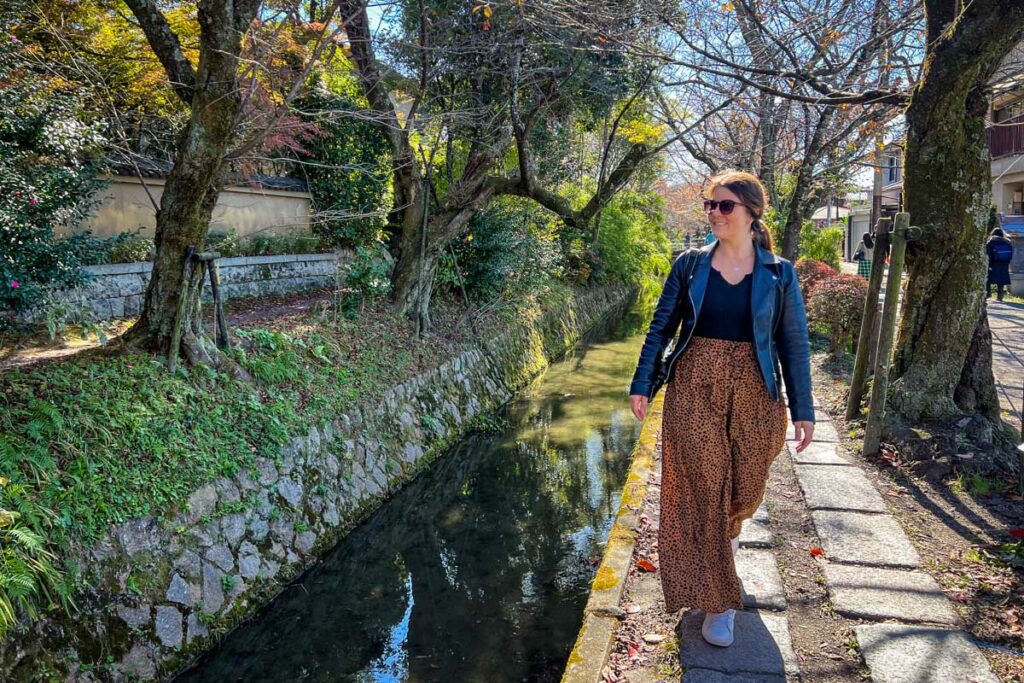
7. Walk the Philosopher’s Path
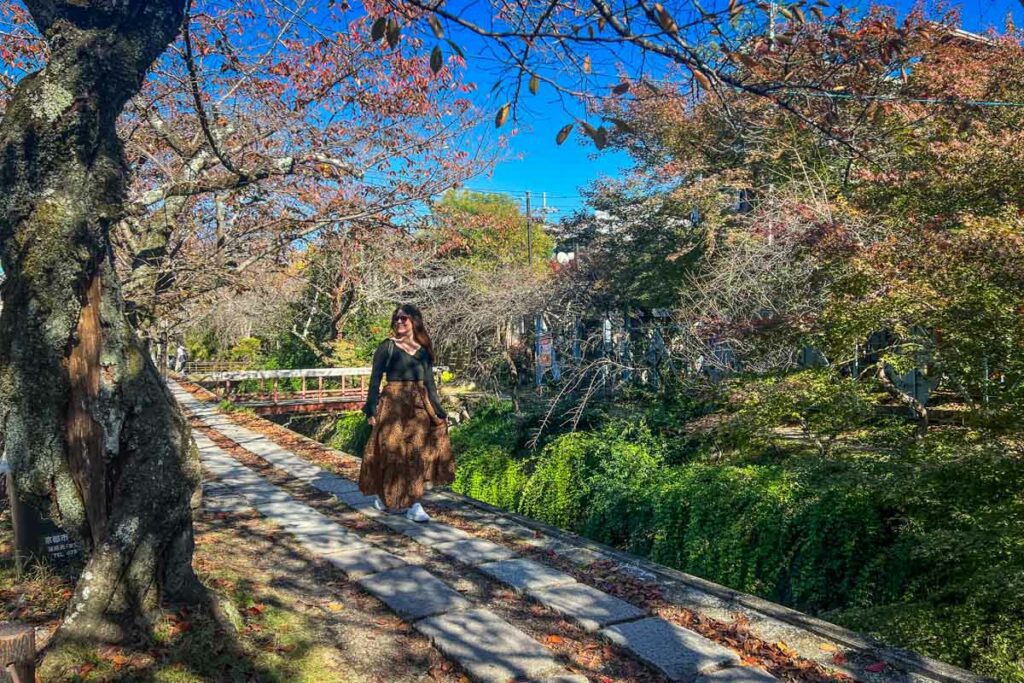
Follow the stone laid steps of Japan’s famous philosopher, Nishida Kitaro, who foraged this path daily commuting to Kyoto University.
The trail is one of the best things to do in Kyoto on its own, but it also connects three magnificent temples you should meander to see: Ginkaku-Ji, Eikan-do/Zenrin-ji, and Nanzen-Ji Temple.
The pathway follows a canal lined with hundreds of cherry trees, creating a dreamy pink and white tunnel during Japan’s cherry blossom season.
Begin your stroll at Ginkakuji (Silver Pavilion) and follow the trail, Tetsugaku-no-michi, for about a mile until you reach the Nanzenji neighborhood.
8. Arashiyama Bamboo Forest (& a hidden bamboo grove!)
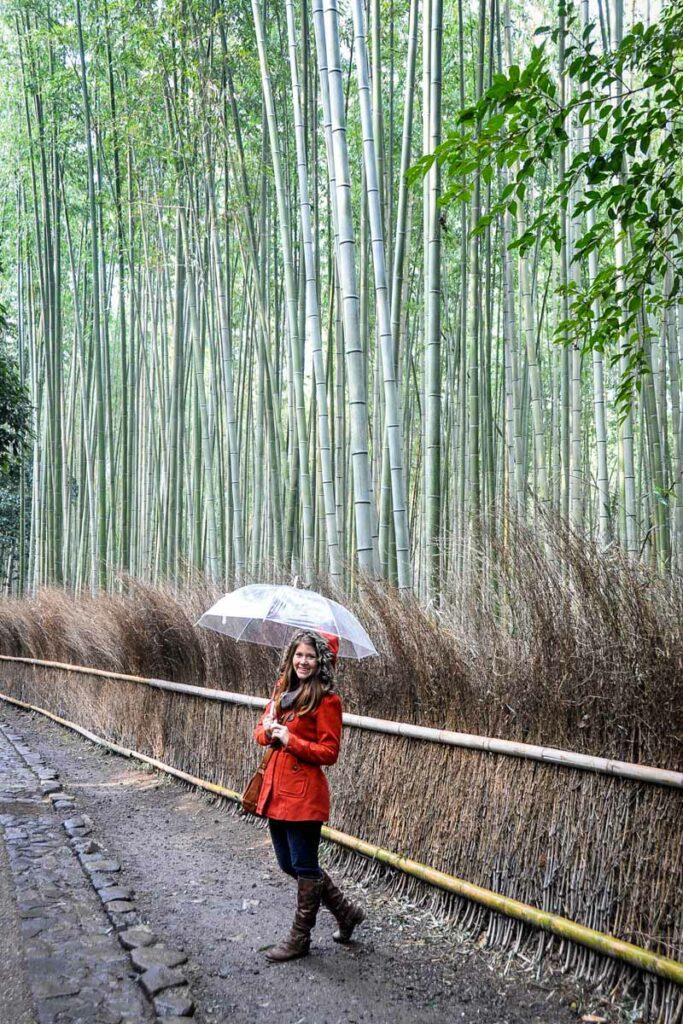
There are few Kyoto attractions more iconic than the Arashiyama Bamboo Forest.
Strolling through a forest of towering bamboo stalks that sway ever so slightly in the breeze creates an almost otherworldly atmosphere.
While photos online may make it seem like this is a tranquil oasis, I can guarantee that you will find it to be very crowded at almost all hours of the day.
That said, it is still one of those places you have to visit in Kyoto.
As long as your expectations are managed, Arashiyama Bamboo Forest is still worth a visit – especially since there’s a much less crowded bamboo forest nearby…
Hidden Bamboo Grove: Adashino Nenbutsuji Temple
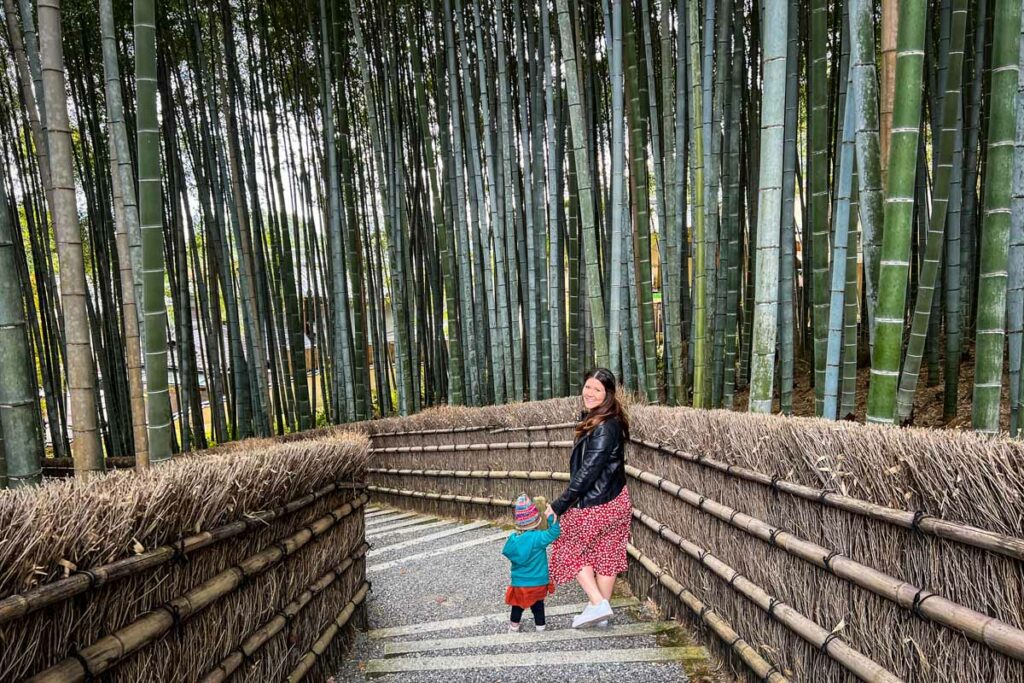
Most visitors head to the Arashiyama Bamboo Forest, then return to Kyoto city center, completely missing this hidden gem.
The Adashino Nenbutsuji Temple is believed to have been founded in the 8th century by a monk who placed stone statues around the grounds to honor the souls of the dead. Today, there are more than 8,000 stone statues, many covered in moss.
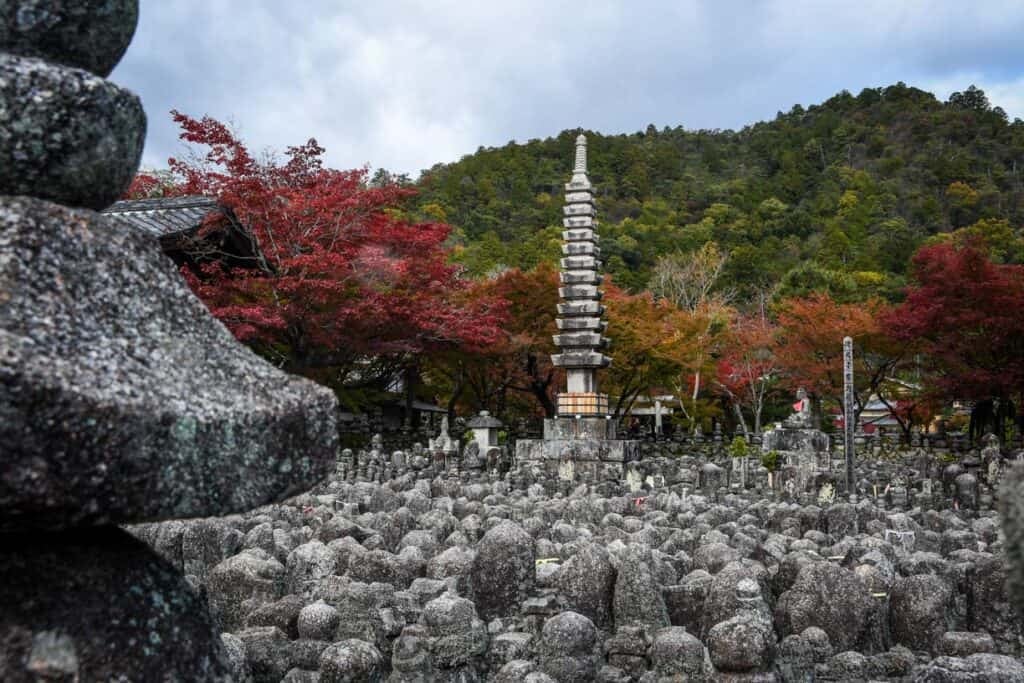
In addition to these memorials, Adashino Nenbutsuji Temple has a peaceful bamboo grove that feels like a hidden gem compared to the Arashiyama Bamboo Forest.
More lesser-known bamboo forests:
These temples have small bamboo groves and are less crowded than the one in Arashiyama, making them a good choice if you’re trying to avoid lots of people.
9. Visit Otagi Nenbutsu-Ji
- Entry fee: 300 yen ($2.35)
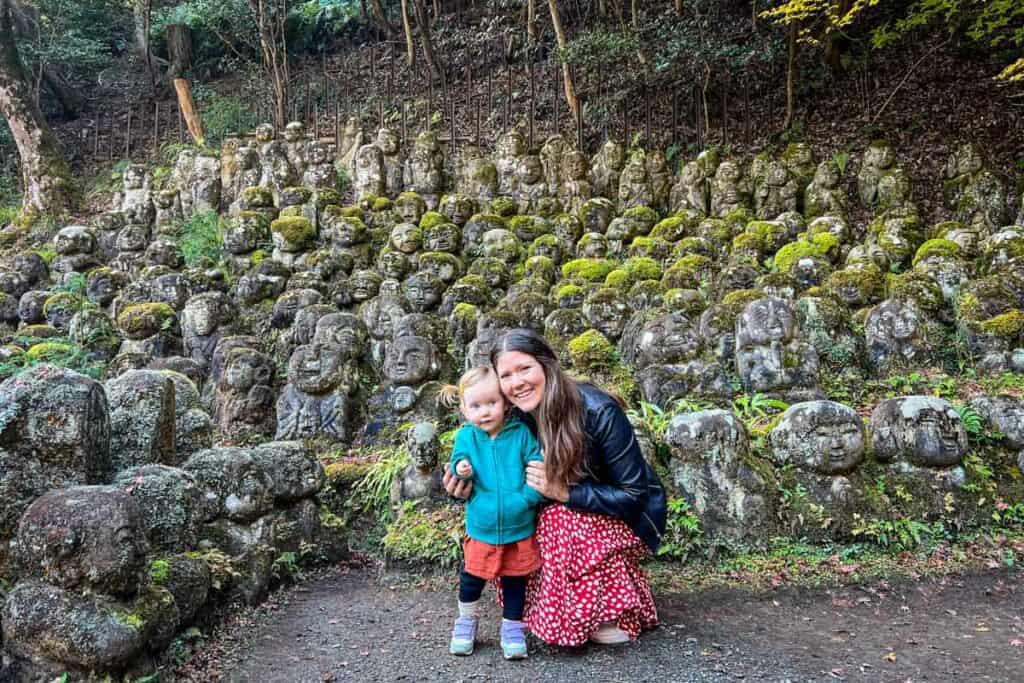
Speaking of stone statues, off the beaten path in Arashiyama are more than 1,000 whimsical stone sculptures nestled in a former 8th-century Buddhist temple.
The original Otagi Temple experienced many devastating natural disasters that decimated the grounds in the early 1900s, so one of the priests deconstructed what was left and rebuilt it piece by piece in a safer location (now Kyoto).
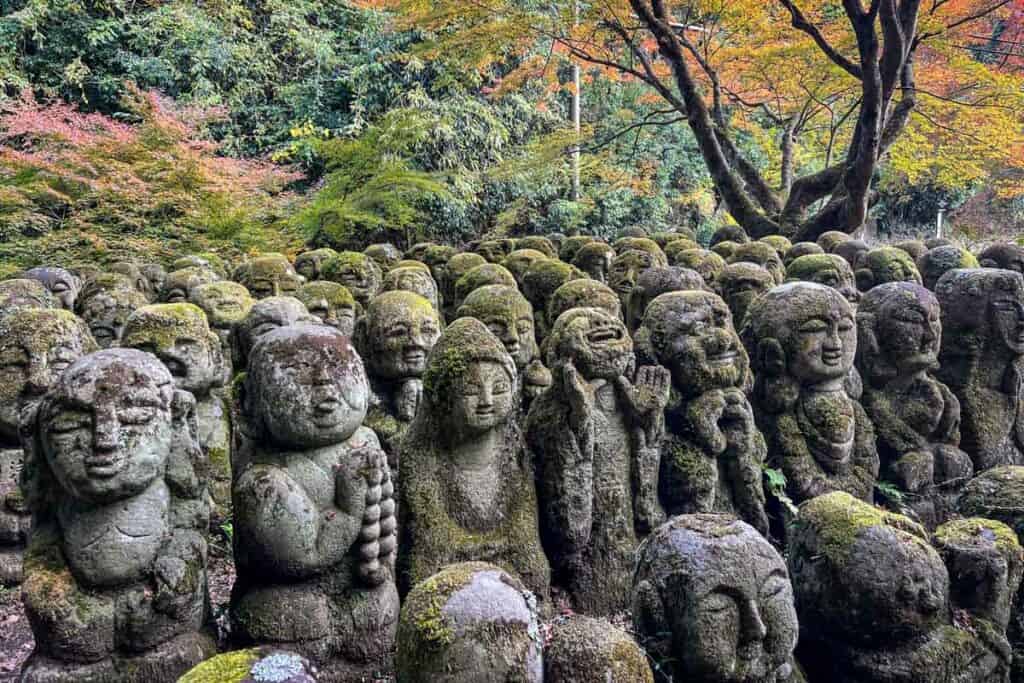
During its restoration, hundreds of Rakan statues were added to the grounds, creating a peaceful and meditative experience as you wander around the temple.
A favored game among visitors is scanning the sculptures and finding the face that closely resembles your own.
10. Explore more of Arashiyama
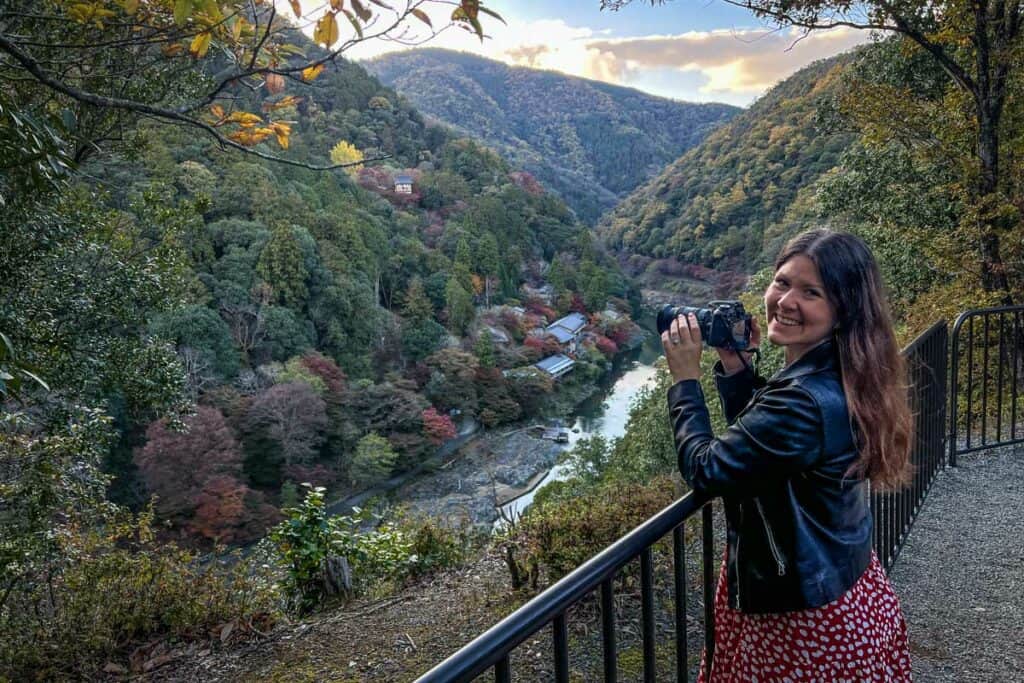
Arashiyama is most famous for its bamboo forest (see above), but this neighborhood on the western outskirts of Kyoto has much more to it and is worth part of a day.
Things to do in Arashiyama
- See Japanese macaques up close at the Iwatayama Monkey Park
- Walk through the Kimono Forest, an art exhibit featuring poles covered in colorful kimonos (beautiful at night & during the day)
- Get a view from the Arashiyama Park Observation Deck
- Feel a world away from the city at Jojakkoji, a peaceful forested temple
- Explore Tenryū-ji, a Zen temple with a teahouse & large gardens
- Togetsu-kyo Bridge: 400-year-old wooden footbridge
- Wander past historic houses on Saga Toriimoto Preserved Street, where few tourists venture
- Take a day trip on the Sagano Scenic Railway
11. Have dinner in Pontocho Alley
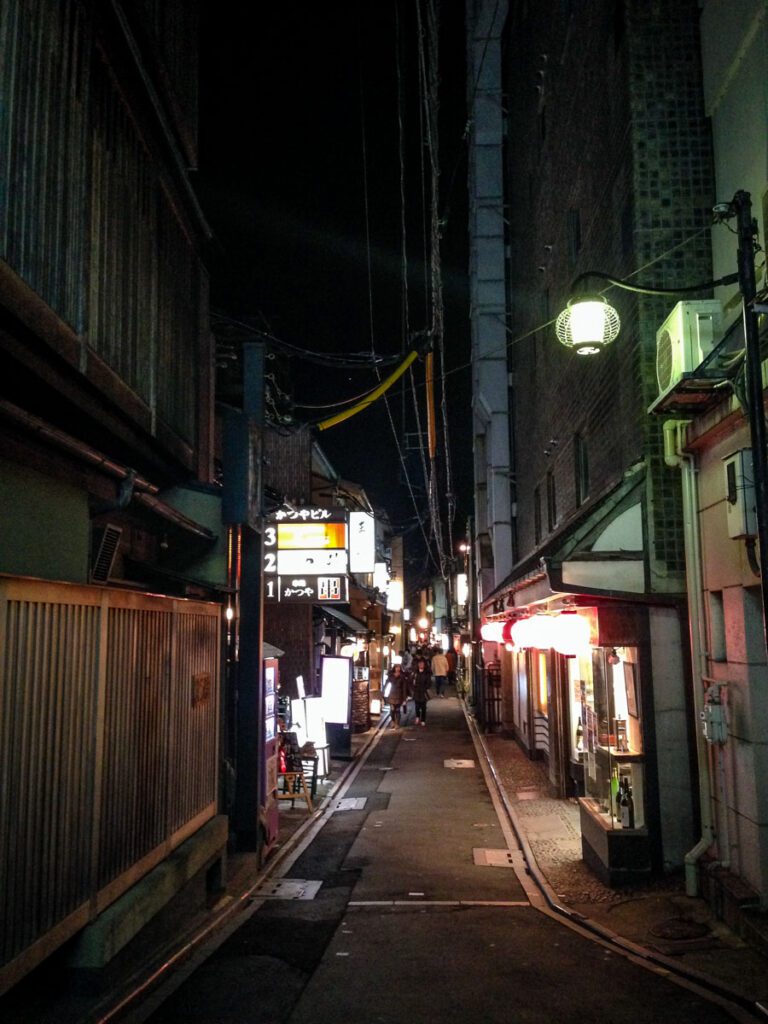
Widely known as the most beautiful street in Kyoto, Pontocho Alley is home to traditional wooden shops and restaurants that ooze Japanese charm.
Situated one block west of the Kamogawa River, this narrow street is a great spot to wander in the early evening hours and pop into whatever restaurant strikes your fancy.
From fine dining restaurants (that require reservations and a fat wallet) to casual noodle shops and pubs, you’ll be sure to find something that fits the bill.
If you’d rather head directly to your destination rather than wander, these Pontocho Alley restaurants come highly recommended:
- Pontocho Fujita: Kaiseki (traditional multi-course meal) restaurant specializing in fish and vegetable dishes
- Yoshiya: local favorite serving regional cuisine; reservations needed
12. Kinkaku-ji Temple (Golden Pavilion)
- Entry fee: 400 yen ($3)
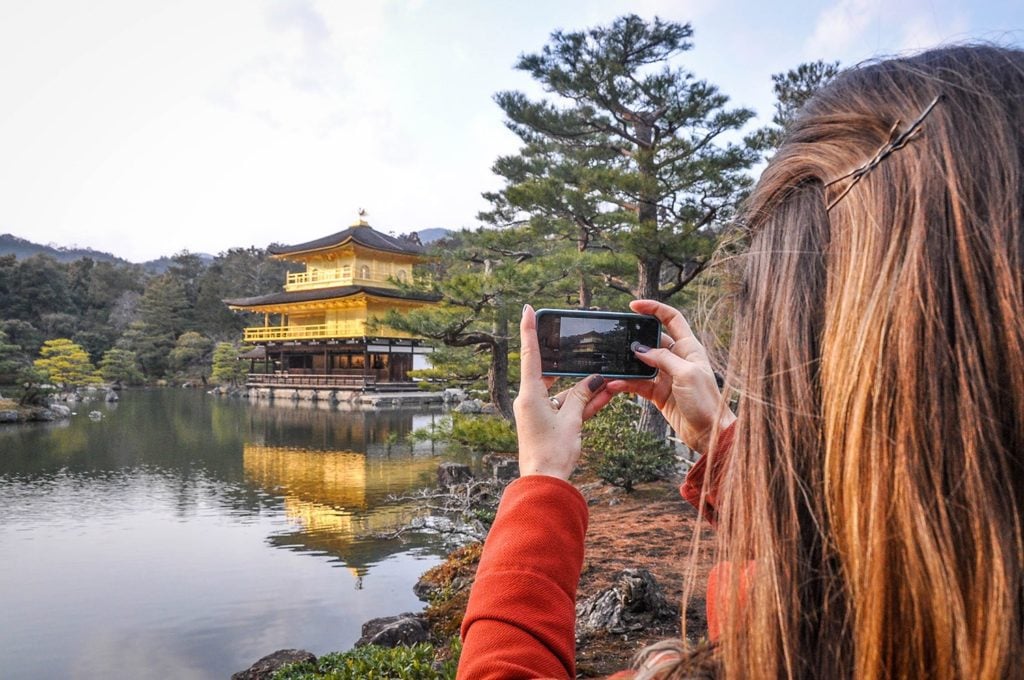
This dazzling Buddhist temple, covered in gold leaf, is one of the most famous sights in Kyoto and the crown jewel of the ancient city.
The pavilion showcases three unique types of architecture: the Heian Period on the ground floor, houses of the samurai on the first floor, and style reflection of Zen temples on the second floor.
All of these styles are reflected beautifully into the lake beside the temple, making for a pretty stellar photo-op, especially around dusk when the sun is setting.
13. Visit Ginkaku-ji Temple (Silver Pavilion)
- Entry fee: 500 yen ($4)
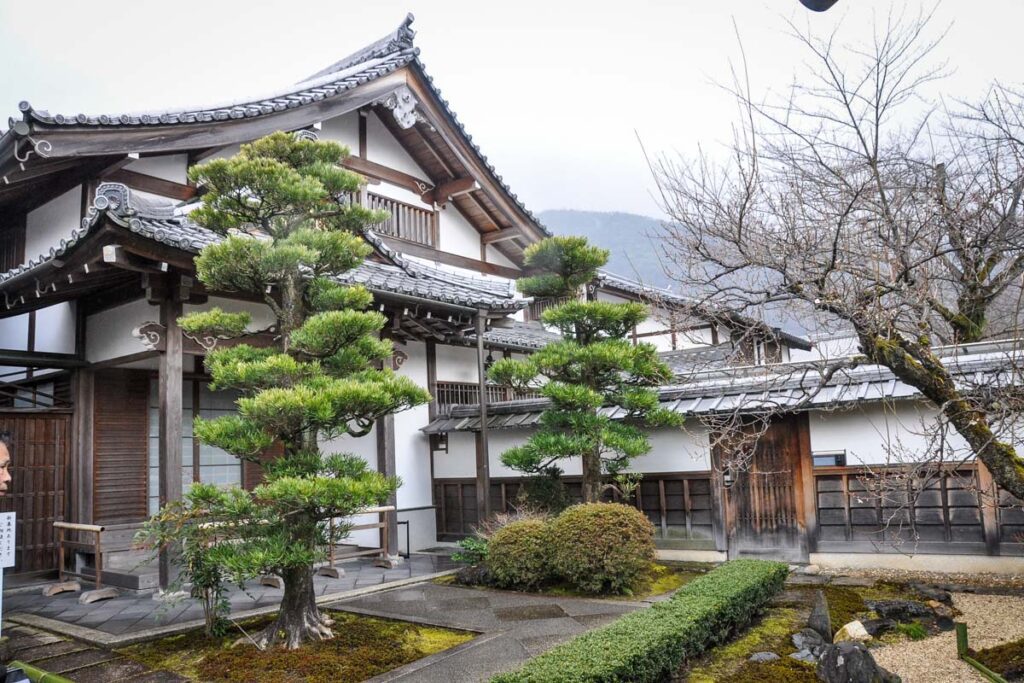
Modeled after the golden Kinkaku-ji Temple, shogun Ashikaga Yoshimasa’s 15th century retirement villa turned temple sits beautifully at the edge of Kyoto’s eastern mountains.
Despite its nickname, it’s not actually coated in silver.
The alias was given mainly because of the way the moon reflected off the temple’s dark exterior, giving it a more silver look in addition to its contrast to the Gold Pavilion.
The Silver Pavilion is the main draw, however there are half a dozen other temple buildings, a moss garden, and a dry sand garden that can also be enjoyed along a clockwise walking path.
Good to know: This spot is especially beautiful (& popular!) during cherry blossom season.
14. Kyoto Free Walking Tour
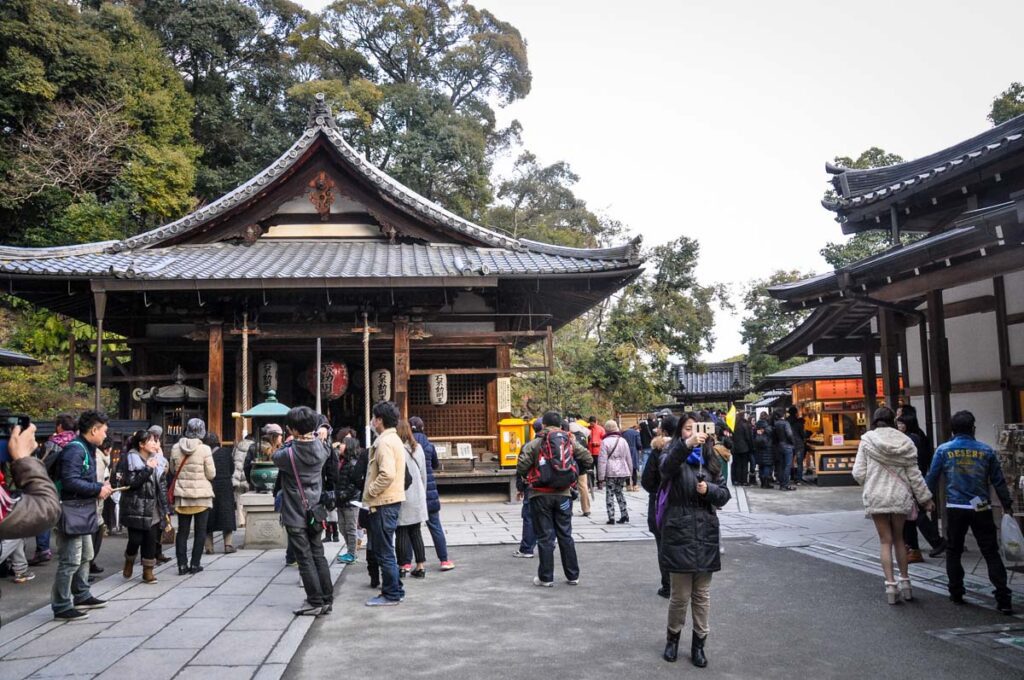
We are big fans of taking free walking tours when we travel to new cities around the world.
You get to connect with a local, learn all sorts of tidbits you’d never pick up if you were wandering the city on your own.
Plus, you can usually ask your guide for local advice and recommendations.
FYI: Free walking tours don’t cost anything to join, but it is expected that you tip your guide.
Do it yourself: See more information on how to join a tour and where to meet at the Kyoto Free Walking Tour website.
15. Wander around Gion
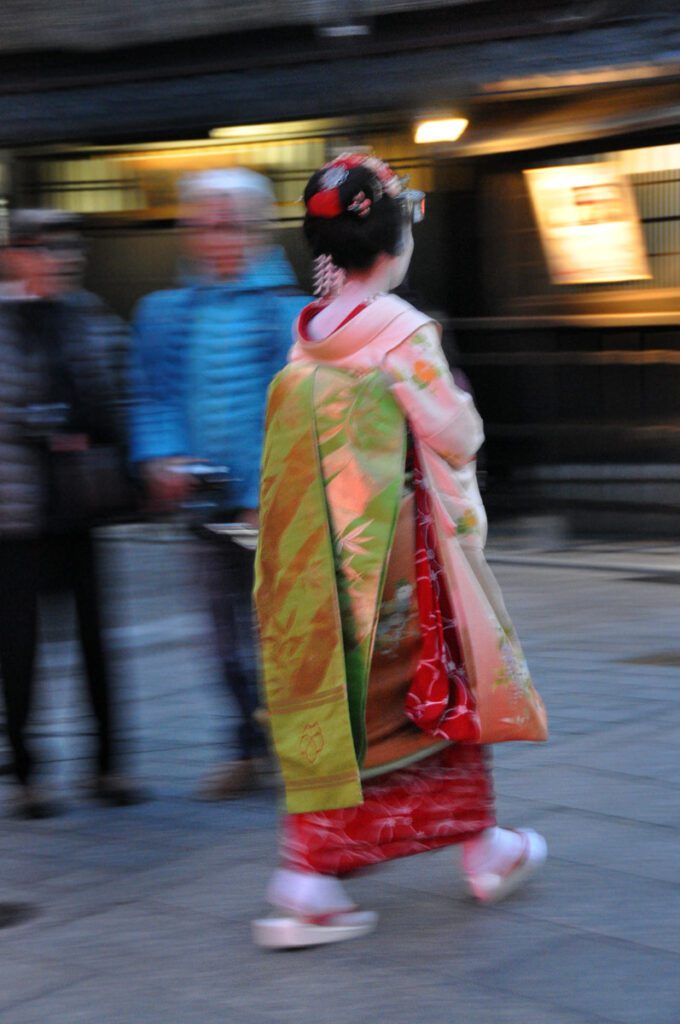
Famously known as the “Geisha District”, Gion should not be missed.
Wander around this neighborhood and you’ll find: upscale Japanese restaurants, ochaya (or teahouses), and boutiques.
Additionally, you’ll find many important landmarks, including the following:
- Tatsumi Bridge
- Kennin-ji Temple (known for Zen garden)
- Yasaka Shrine
- Nene-no-michi Lane
- Ishibei-koji Lane
Want a local guide? Check out this local’s walk of Gion by night.
16. Take a Japanese cooking class
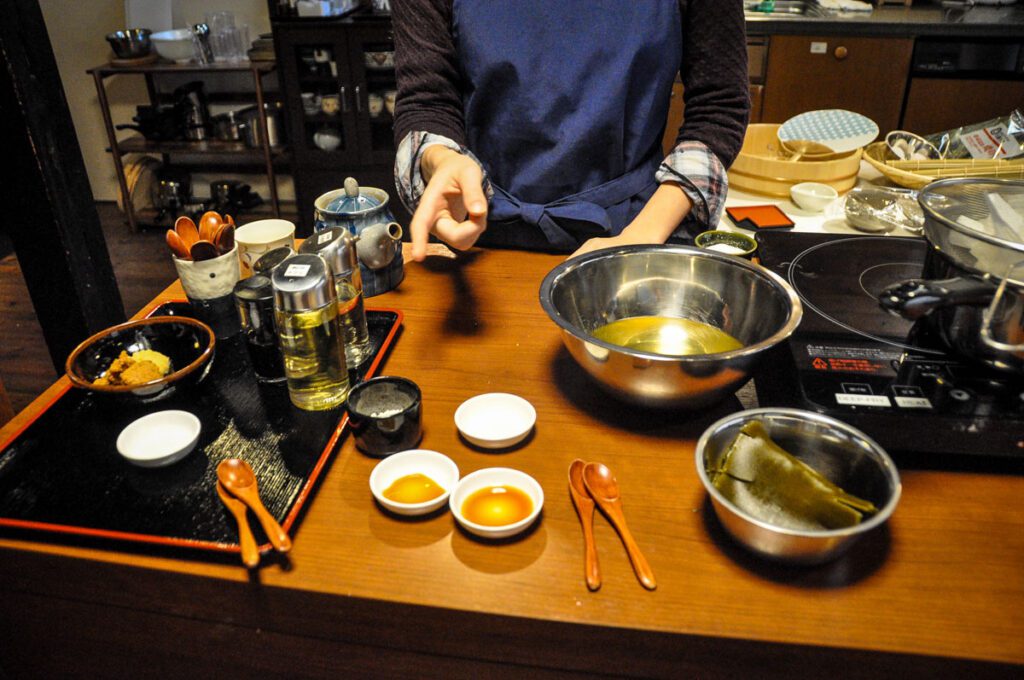
Whether you fancy yourself a chef, or you’d like to sharpen up your skills, taking a cooking class is one of the most unique things to do in Kyoto.
We’ve personally taken 2 cooking classes in Japan:
- one where we made 3 types of ramen
- one where we made many different types of sushi
After each class, we got to enjoy an incredible meal and give ourselves a pat on the back because we were the ones that made it!
We had so much fun learning the process behind two of our favorite Japanese foods.
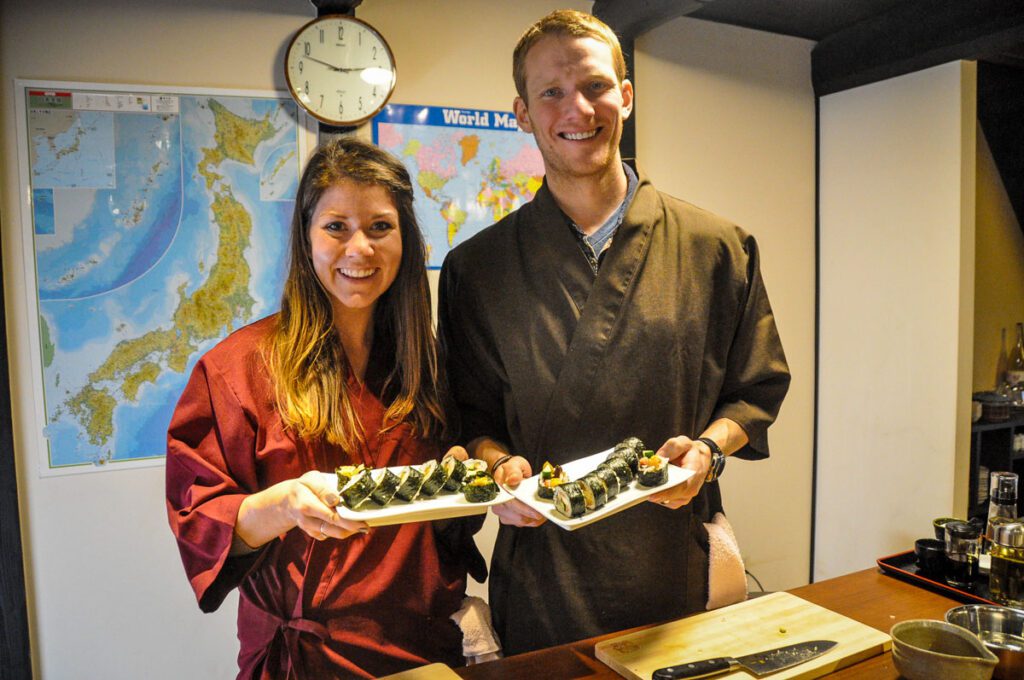
The added bonus is that you are typically given recipes to bring home (and the know-how on how to execute them), so you can recreate the meals for your family and friends. It’s kind of like a souvenir that keeps on giving!
If you’re looking for a cooking class in Kyoto, there are plenty to choose from. Here are our top recommendations:
- Learn the art of sushi making
- Miso-making experience at a Samurai house
- Vegan ramen & gyoza cooking class

Psst! We know it’s a lot to take in. Our Kyoto Itinerary organizes the best of this list into 4 fully-planned, interchangeable days — so you’re not spending your trip deciding what to prioritize, you’re just exploring. See what’s inside the Kyoto Itinerary →
17. Wander the colorful Kimono Forest
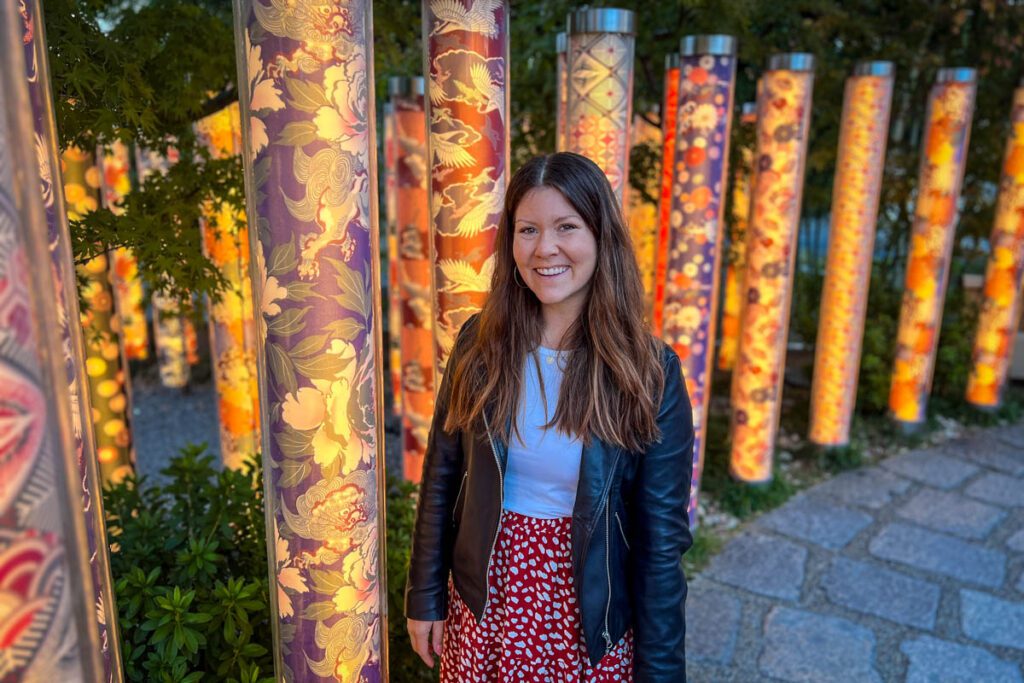
Make your way to the Randen Arashiyama Station to walk through nearly 600 pillars made with traditional Kyo-Yuzen dyed fabrics.
The dying technique is used to create the vibrant colored kimonos you’ll spot all over Kyoto. A quick wander through this “forest” will wow you with 32 different textile patterns to admire.
The path is arguably most beautiful at night, where each pillar is illuminated to create a breathtaking and mystical pathway.
18. Arashiyama Monkey Park
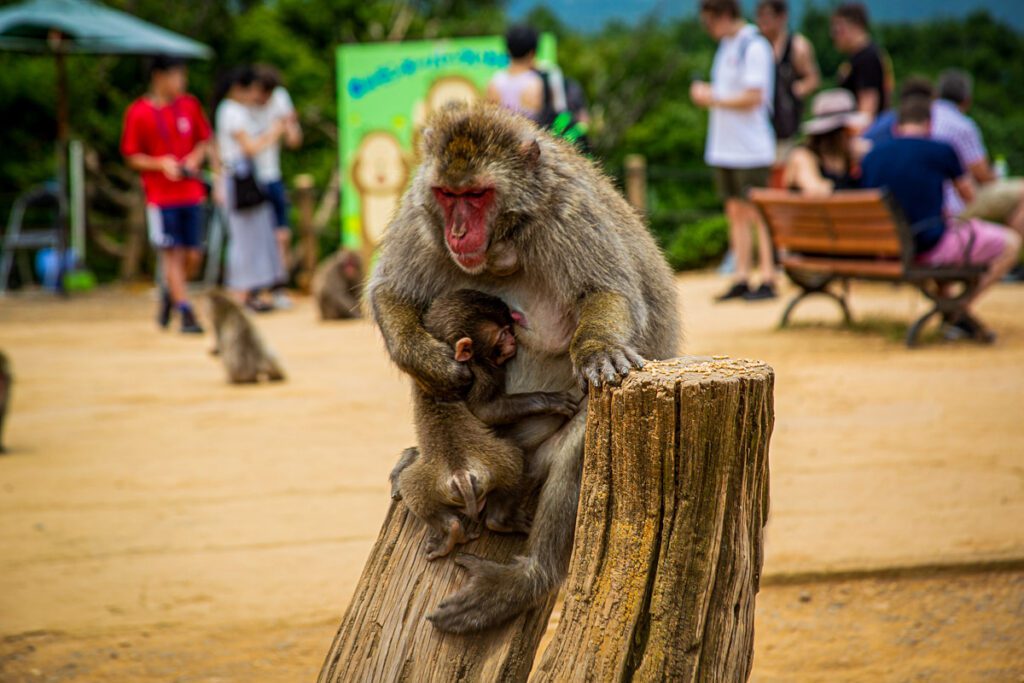
- Entry fee: 550 yen ($4)
While the snow monkeys soaking in Jigokudani Park is a bucket list-worthy experience, you can enjoy the same monkeys, sans hot spring, right in the heart of Kyoto.
At the top of Mount Itawa, over 120 semi-wild snow monkeys play and scamper around the area where you can feed them while getting a bit of midday entertainment.
After a short walk to the mountaintop park, you have the option of entering a small hut to feed the monkeys, kind of like a reverse zoo experience, or you can enjoy them freely outside.
Good to know: Do heed the warning though, don’t get too close and don’t look them in the eye as they see it as a threat.
19. Kiyomizu-dera Temple
- Entry fee: 400 yen ($3)
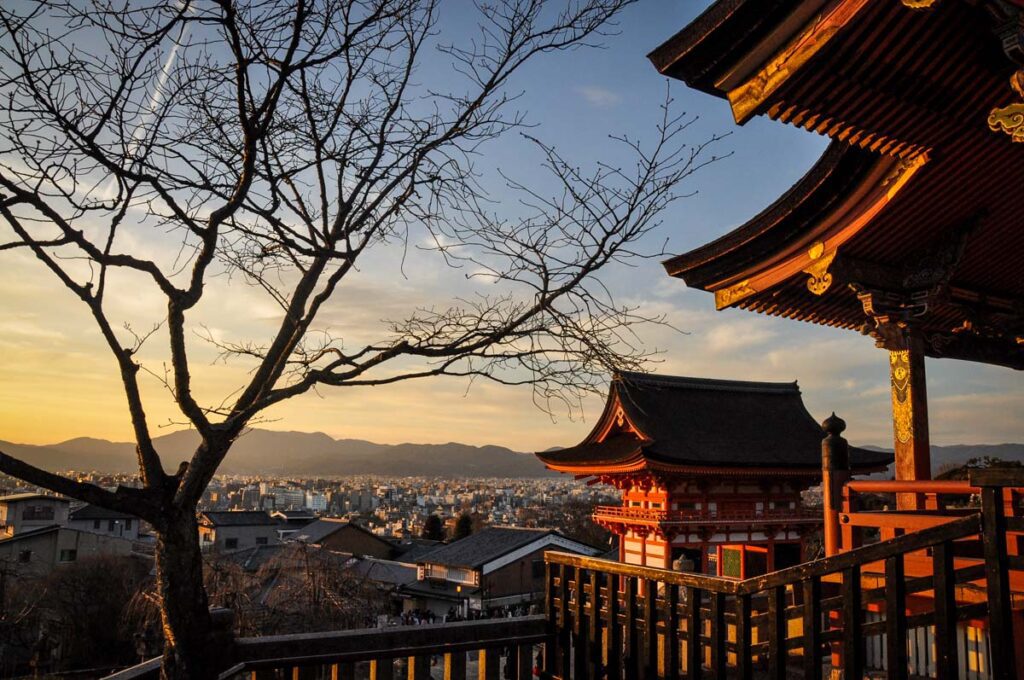
Atop Mt. Otowa in the Higashiyama mountain range, is one of the most celebrated temples in Japan.
Wander the grounds and visit the temple’s main draw, the wooden balcony jutting over the city’s eastern hills where you can gaze out on Kyoto’s city skyline and an endless sea of cherry and maple trees.
The temple was built near a pure stream nestled in the mountains, which is where the grounds got their name, translating literally to “Pure Water Temple”.
Its flow is divided into three streams, representing longevity, success in school, and an optimistic love life. Use the cups to sip from the streams, but choose wisely since drinking from all three is considered greedy.
20. Spot a Geisha
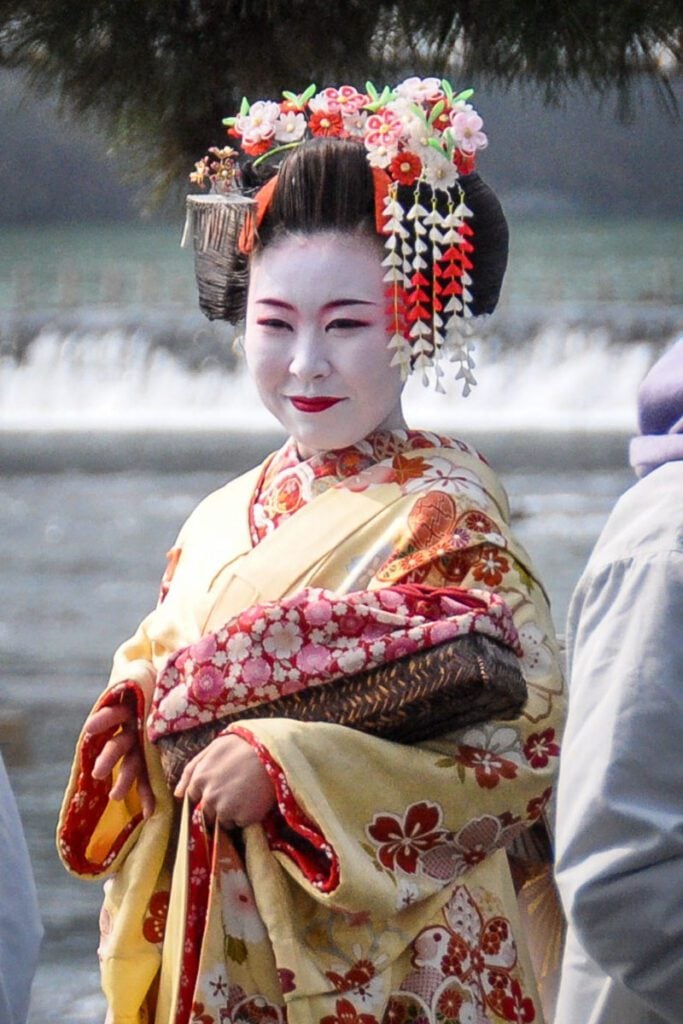
Geisha are highly-trained Japanese performance artists, who specialize in singing, dancing and playing traditional instruments.
Meeting a geisha or a maiko, a geisha in training, is at the top of many travelers’ bucket lists.
While in the past, there were tens of thousands of geisha in Japan, it is estimated that there are fewer than 200 geisha and maiko in Kyoto today. This means seeing one in real life is quite special.
You can book a cultural performance where you will see geisha perform. Or you can try to spot them as they walk to their appointments, usually between 6 – 8 p.m.
The best areas to see geisha in Kyoto:
- Hanamikoji Street in Gion
- Southern end of Pontocho Alley
Important: Be respectful and keep your distance. In recent years, some geisha have reported being harassed and bothered by eager tourists.
21. Try matcha ice cream
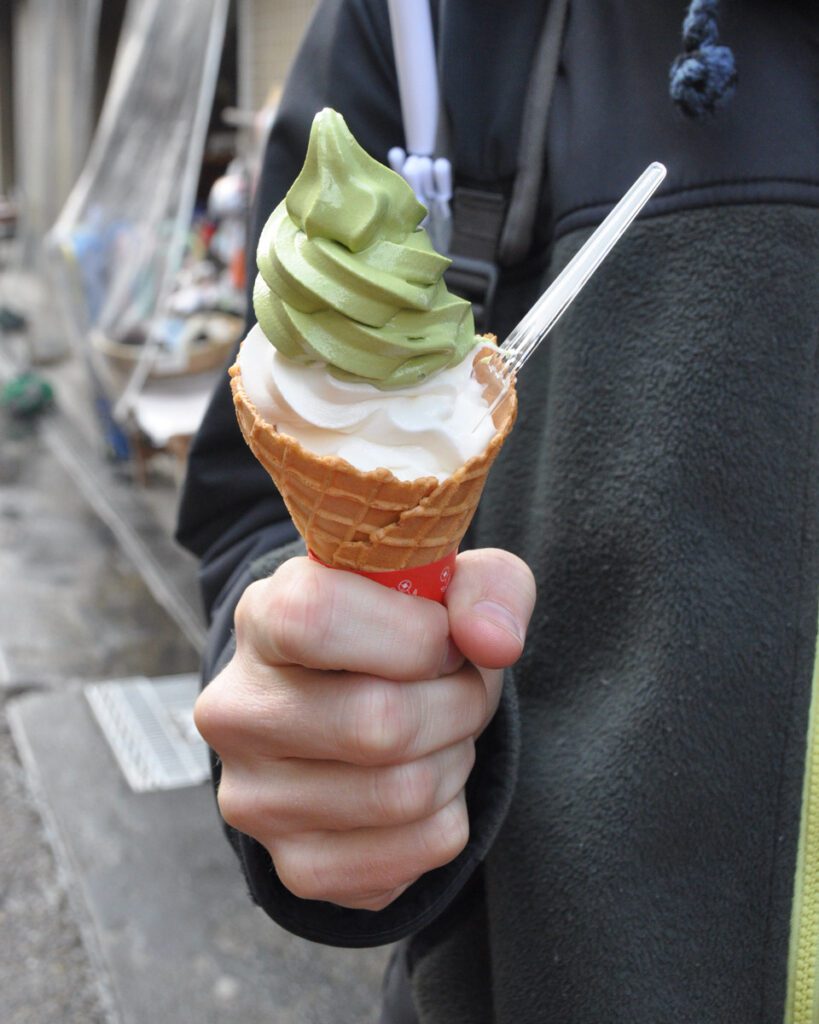
Matcha is a big deal all over Japan, and you’ll see a lot of matcha treats around Kyoto: pancakes, mochi, tea cookies…
Sample whatever your heart desires, but we’re fans of matcha ice cream.
Insider Tip: We preferred to have it mixed with vanilla so the sweet and creamy balanced out the green tea’s bitterness.
21. Shop for souvenirs
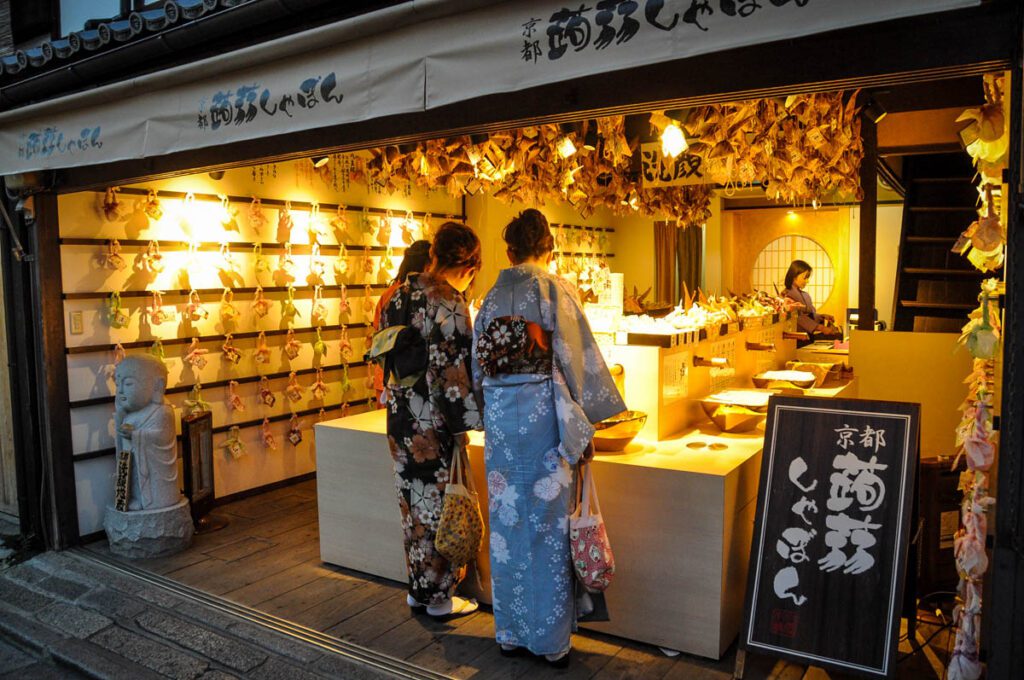
If you want to come home from your trip with some traditional Japanese souvenirs, Kyoto is one of the best places to shop for them.
We particularly liked shopping for ceramics, handmade fans and chopsticks along Ninenzaka pedestrian road in the Higashiyama historic district.
We even have a list of our favorite (non-cheesy!) Japanese souvenirs to help you make a list of what to look for!
22. Check out a speakeasy or a rooftop bar
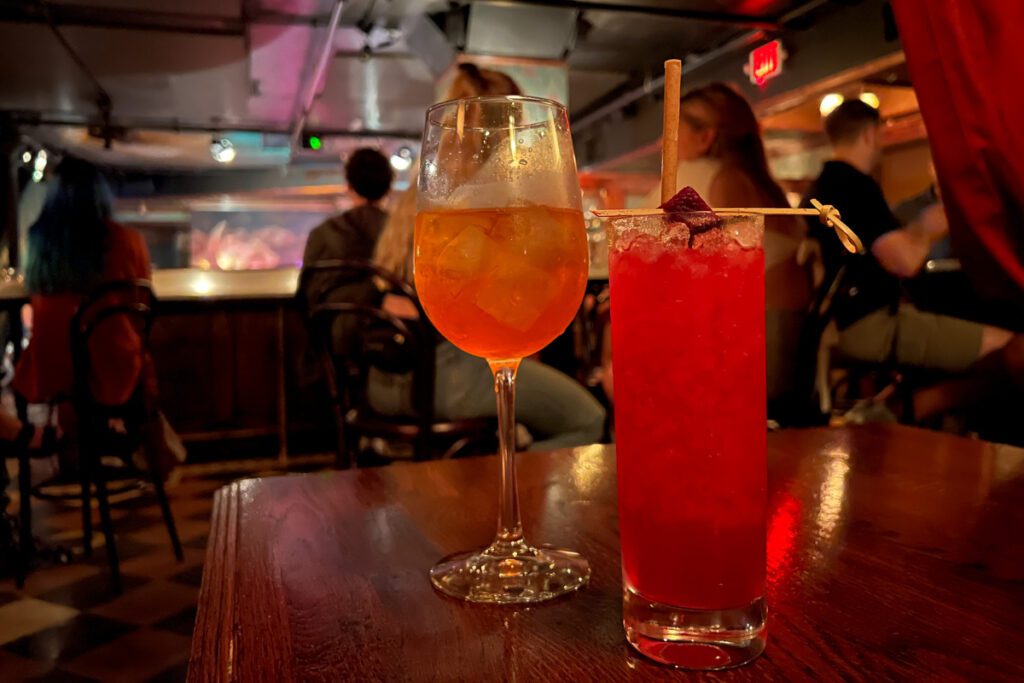
We’re huge fans of speakeasies.
Handcrafted cocktails in a hidden, intimate atmosphere… I mean, you can’t get much better when it comes to nightlife (in our opinion, anyway).
Luckily, Kyoto has a handful of excellent speakeasies to choose from:
- Bee’s Knees: This cozy cocktail bar has landed a spot on Asia’s 50 Best Bars list several times, meaning it’s no secret, but still very much worth a visit. Try their inventive Japanese twists on classic cocktails.
- Scotch & Branch: To get here, you must step through a phone booth — adding to the speakeasy charm! Once you’re inside, you’ll find a dimly-lit bar that specializes in whiskey.
- L’Escamoteur: Known for being a little over the top, the stunning preparation and presentation of the cocktails is part of the allure.
If a rooftop is more your vibe, Kyoto has it’s share of those as well. Here are our top 3 recommendations:
- Cicon Rooftop Bar (Nohga Hotel): Beautifully designed rooftop bar with fire pits, cafe lights and comfy couches. Enjoy the view over cocktails and light bites.
- K36 Bar & Rooftop: Sleek rooftop venue with sweeting city views and an impressive menu of whiskeys and champagne.
- in the Moon: Trendy rooftop bar featuring cocktails, music and a lively atmosphere.
23. Crawl through the Enmusubi Stone & make a wish
Have you had your fill with the modern day dating scene?
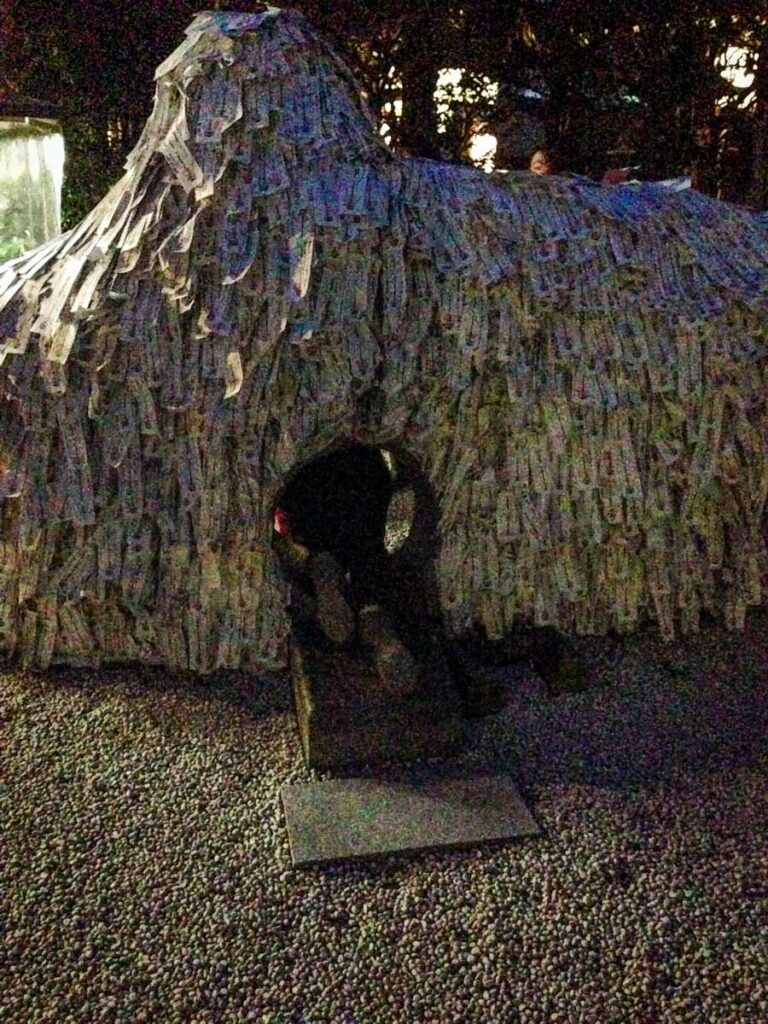
A visit to the Yasui Kompira-gu Shrine may turn your luck around! This shrine holds a powerful stone said to end bad relations and foster good ones.
Write down all your wishes on a paper amulet, crawl in and back out of the hole in the stone, then pin your amulet to the exterior for your wish to come true.
Even if you don’t have wishes in romance, this shrine is very popular to come and wish or pray away bad luck, poor relations, misfortune, and for better days to come.
24. Photograph Toji Temple
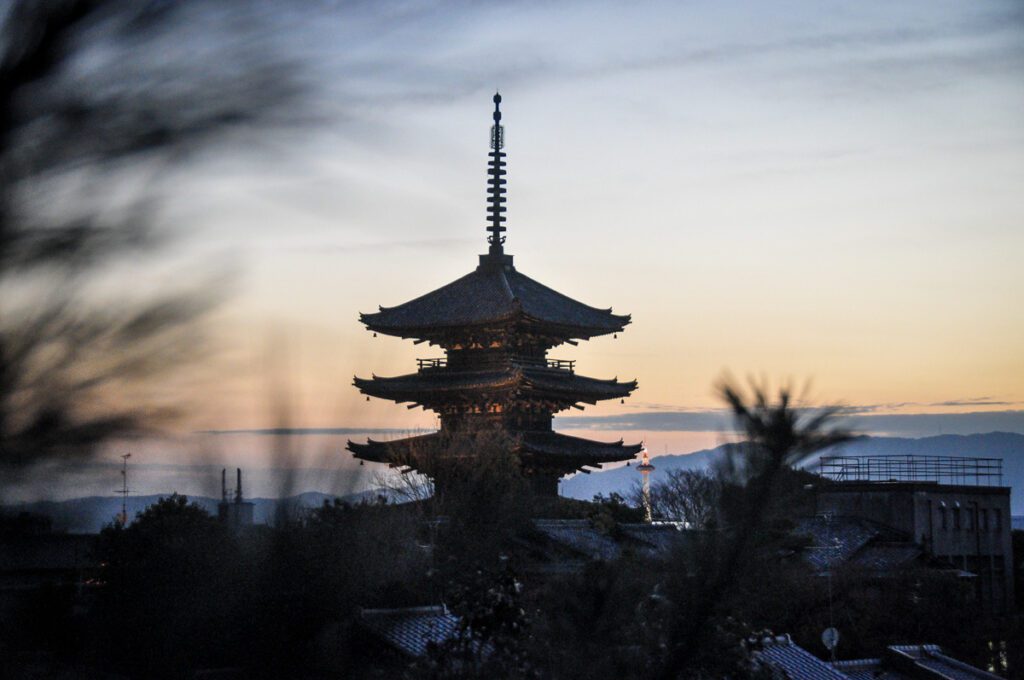
Founded in 796, this UNESCO World Heritage Site is one of 17 around Kyoto, known for having the tallest wooden pagoda in Japan.
The 5-tier pagoda can be spotted from various locations around Kyoto, and has become one of the main symbols of the city.
One of the best views is from the zen gardens at the base of the tower, particularly when colors change in the fall or cherry blossoms bloom in the spring.
Insider tip: On the 21st of every month, the Kobo-ichi Flea Market takes place in the plaza. Find vintage items, clothing, kimonos, antiques, toys, and many interesting finds.
26. Find Zen at a Japanese garden
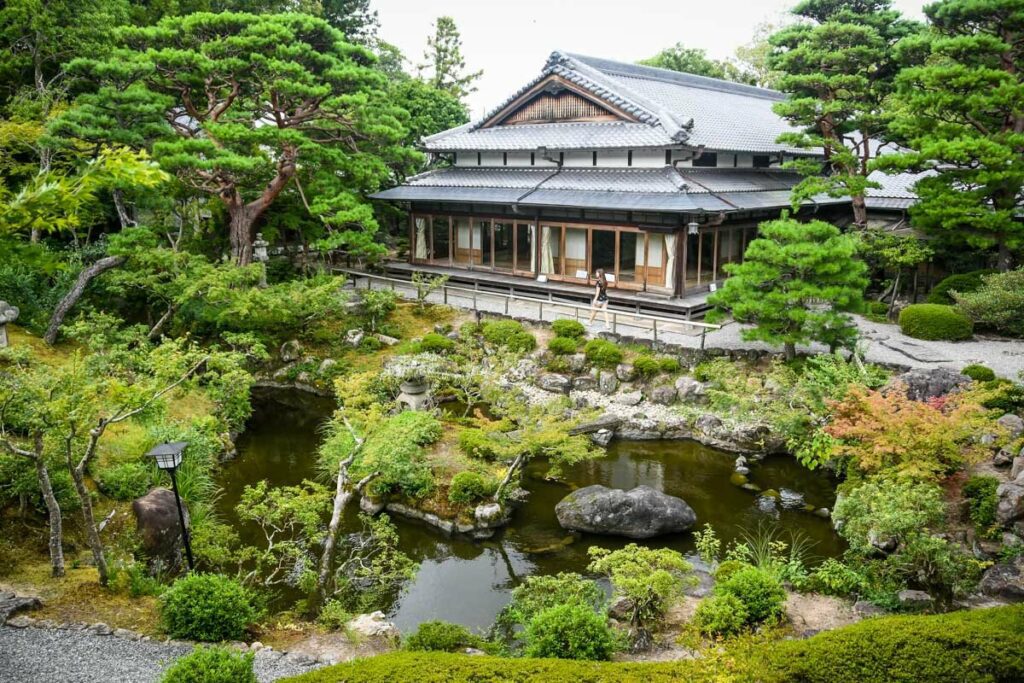
Kyoto is one of the best places in the country to explore Japanese gardens as there are many to choose from.
Three of the best Japanese gardens in Kyoto:
- Kenninji (near Gion)
- Kodaiji (south of Maruyama Park)
- Ryoanji Zen garden (near the Golden Palace)
27. Dine at one of Japan’s oldest restaurants
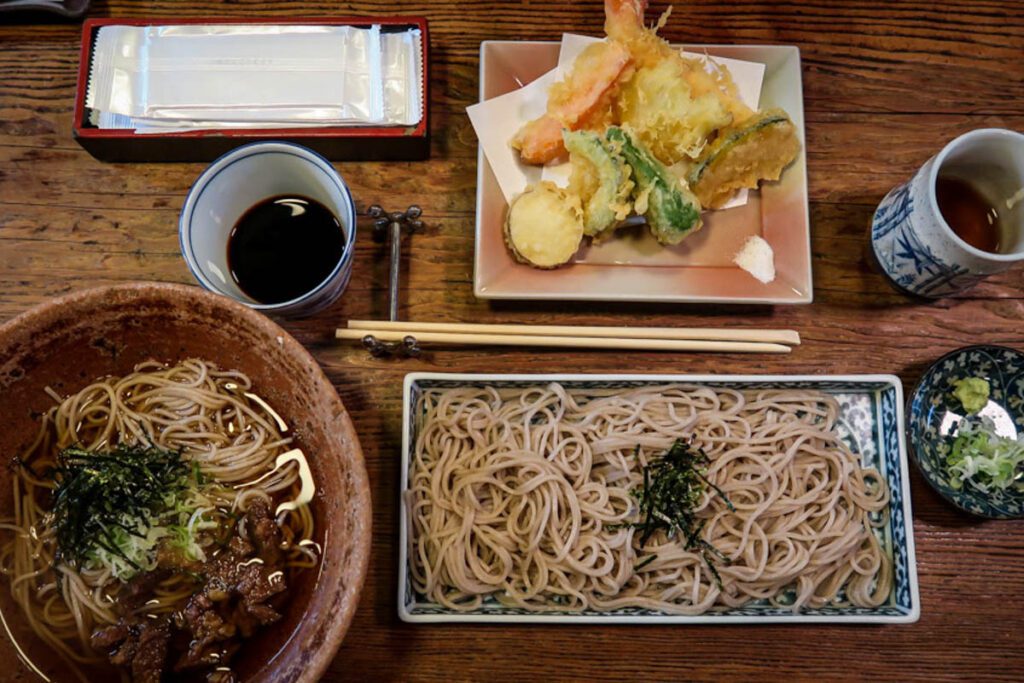
Serving legendary soba since 1465, Honke Owariya’s dedication to fine, carefully crafted ingredients has led this confectionary store turned resto into a sensation for over 500 years.
Inside, you’ll find unique soba dishes you can’t find anywhere else, some of which are acclaimed as the best soba dishes in Kyoto.
The ho-rai Soba, rikyu soba, and sobamochi are just a few specialty dishes you must try when you visit. Explore the menu to find century-old traditions and modern innovations.
Psst! Want all our top recommendations pinned directly in your Google Maps? Our Interactive Japan Map has 200+ custom pins of everything on this list and more! Pull it up on your phone and navigate like a local. Check out the Interactive Japan Map →
28. Get coffee at the coolest Starbucks in the world
Now, Starbucks almost never appear on our lists of recommended “things to do” in cities around the world. There are usually so many more local coffeeshops we’d recommend supporting instead.
However, there are 2 exceptions to this rule (so far!):
- Seattle: It is kind of fun to say you’ve been to the “original Starbucks”.
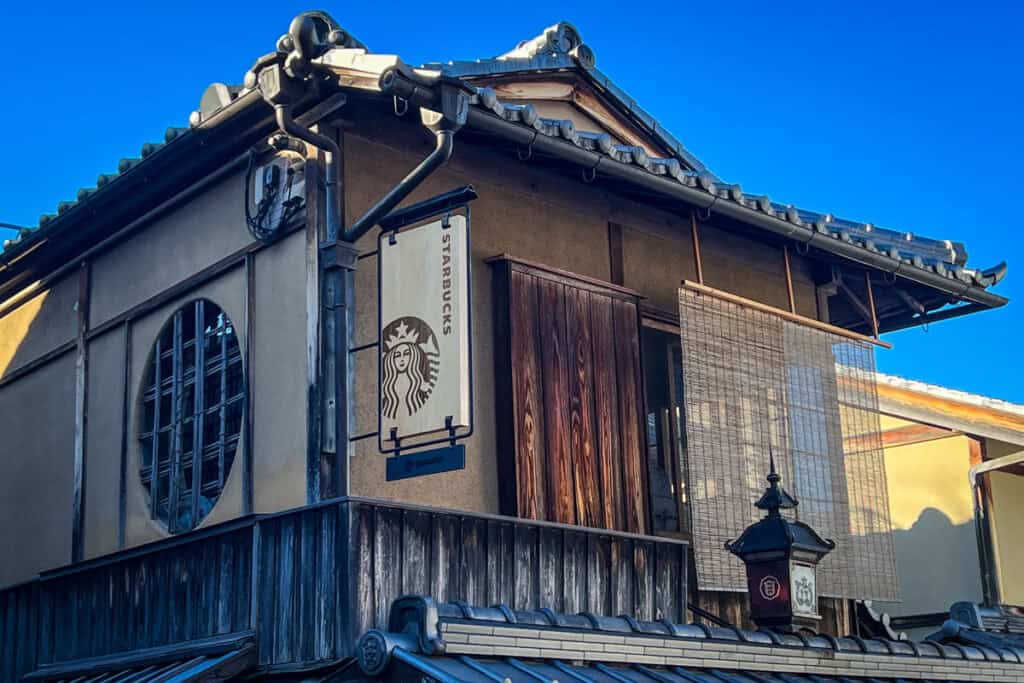
- Kyoto: The Starbucks Ninenzaka Yasaka Chaya location is one of the most unique and beautiful Starbucks in the world.
Here’s what we mean…
With tatami mat rooms where you have to take off your shoes and sit on the floor, you’ve never seen a Starbucks like this one.
You’ll swear you’re in a traditional Japanese teahouse rather than a Starbucks.
Day trips from Kyoto
If you’re looking to see some sights outside the city, there are plenty of amazing day trips from Kyoto.
29. Take a day trip to Osaka
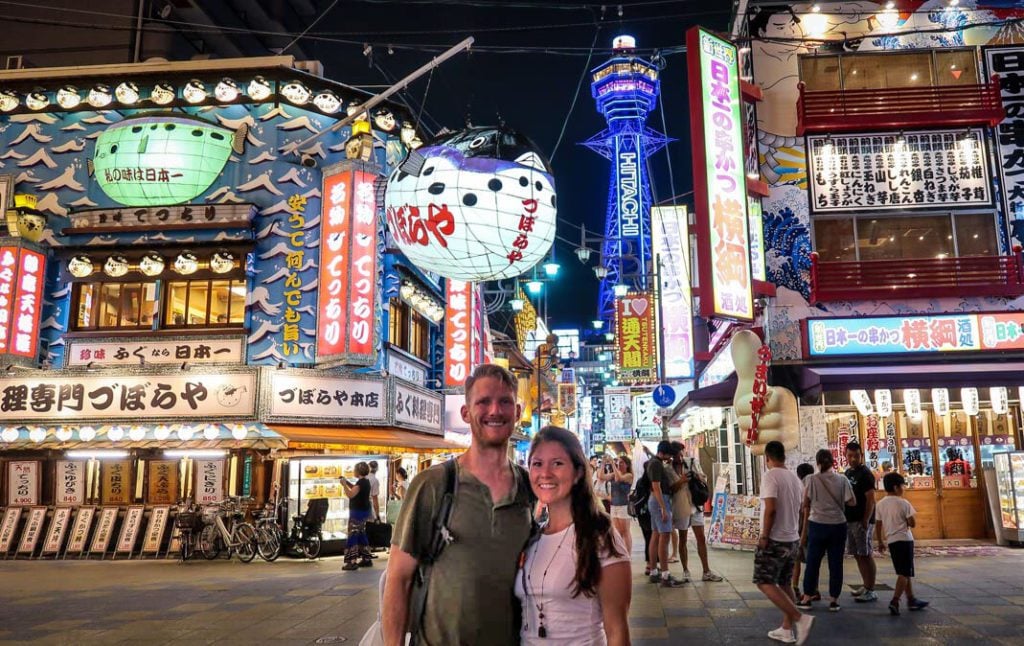
Osaka is one of Japan’s most lively and exciting cities.
While it doesn’t have the charm that you’ll experience on Kyoto’s preserved historic streets or the same level of organized chaos as Tokyo…
But there is a certain gravitational draw to Osaka. It feels like the real modern Japan, with more of a local vibe than a tourist hotspot.
If you have the time, we’d recommend spending a couple of days exploring Osaka because there truly is so much to do. We even have a complete guide to all the best things to do in Osaka.
However, if you are strapped for time, you can certainly visit Osaka as a day trip from Kyoto, as the two cities are just 15 minutes apart by high-speed train.
Want to know more about trains in Japan? We have a Japan Rail Pass Guide packed with practical tips and money-saving advice!
Psst! Are you trying to choose whether to stay in Osaka or Kyoto? Both are worth it if you have the time. But if you can only pick one, our Kyoto vs. Osaka guide can help you decide!
30. See the famous deer in Nara
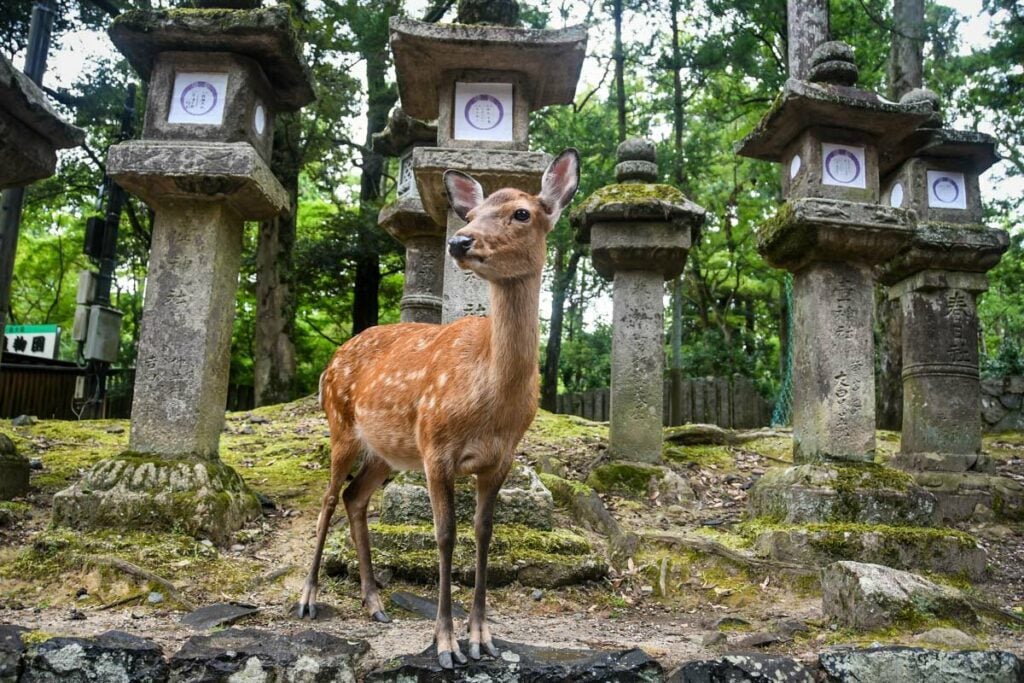
Known for the famous “bowing deer”, Nara is well worth a spot on your Japan itinerary.
While seeing the deer is the biggest draw for most visitors, Nara has a lots of incredible historic sites as this city was once the capital of Japan (during the Nara period, which spanned the years 710 to 794).
Don’t miss this! We’ve curated the perfect Nara day trip itinerary, including must-see attractions and hidden gems (plus a free map!).
Good to know: The fastest train between Nara and Kyoto takes just 35 minutes each way, making this an easy day trip.
Psst! Every single one of our favorite Kyoto experiences is packed into our Kyoto Itinerary with timing, logistics, and the insider tips that actually make the difference. 4 fully-planned, done-for-you days. Grab the Kyoto Itinerary →
Have more time?
If you have extra time in Kyoto, here are a few more experiences worth adding to your itinerary. These things are on our personal bucket list for our next visit!
- Explore the Imperial Palace. Hidden within Kyoto Gyoen National Garden, this was the residence of Japan’s Imperial Family from 1331 until 1869. You can’t enter the buildings, but the sprawling grounds and gardens are worth a wander. Grab an audio tour for 500 yen (~$4) to get the most out of your visit.
- See cherry blossoms at Maruyama Park. The oldest park in Kyoto sits at the base of the eastern mountains and is filled with gardens, rest houses, and small orchards. The star of the show is a massive weeping cherry tree at the center of it all that you simply have to see in bloom.
- Yasaka Koshindo (Kyoto’s most colorful temple). One of the most visually striking spots in the city, this wildly colorful temple tucked into the Higashiyama Ward is covered in kukurizaru: small, colorful balls that worshippers tie their wishes to. Even if you just stop for photos, don’t miss it.
- Take a Japanese art class. Want to go home with a truly unique souvenir and a story to go with it? Kyoto is a wonderful place to try a traditional craft with a local. A few we love:
- Traditional Kyoto Bookmaking: Bind your own book with a silk kimono cover in a studio that’s been a city staple for 55+ years.
- Make Handcrafted Postcards: Create your own washi paper and learn a bit of calligraphy in a family-owned paper shop.
- Learn Japanese Folk Embroidery: Try sashiko, the traditional Japanese embroidery technique, in a relaxed, guided workshop.
- Eat traditional Buddhist cuisine at Tenryuji Temple. Shigetsu serves shojin ryori, a Zen Buddhist style of cooking centered on seasonal vegetables. A truly unique and memorable lunch experience. Open 11 a.m. to 2 p.m. only.
- Soak at Sagano Onsen Tenzan-no-yu. A local favorite and largely off the tourist radar, Sagano Onsen is the best place in Kyoto for a relaxing soak. Note that tattoos of any size are not permitted. Read up on proper onsen etiquette before you go.
How many days do you need in Kyoto?
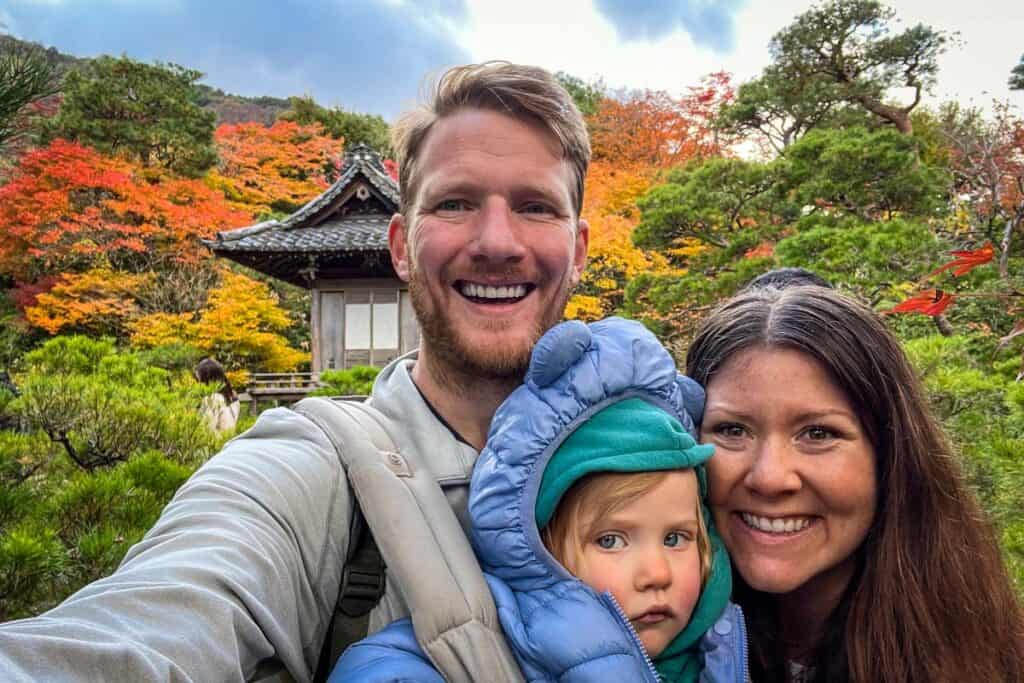
The number of days you need in Kyoto depends on your travel preferences, interests, and the pace at which you like to explore.
If you’re more interested in exploring Japan’s diverse nature outside of the city, you may find that 3 days in Tokyo is enough to get your palette wet. However, for a well-rounded experience of Kyoto, we’d suggest spending 3 to 4 days in the city.
Here are some general guidelines:
- 1-2 days: If you’re visiting Kyoto as a day trip from Osaka, we’d recommend hiking at Fushimi Inari and exploring Gion or Higashiyama. If you have 2 days in Kyoto, you’ll be able to see more sights in the city as well as Arashiyama. And guess what? We have the perfect 2-day Kyoto itinerary with all the planning already done for you!
- 3-4 days: With 4 nights (3 full days) in Kyoto, you’ll be able to see a lot of the top sights and get off the beaten path a pit as well. We recommend devoting a full day to Arashiyama, as there’s a lot more to see than just the famous bamboo grove.
- 5 days or more: Explore more of the city and add day trips to nearby destinations, such as Nara, Osaka, or Hiroshima.
Where to eat in Kyoto
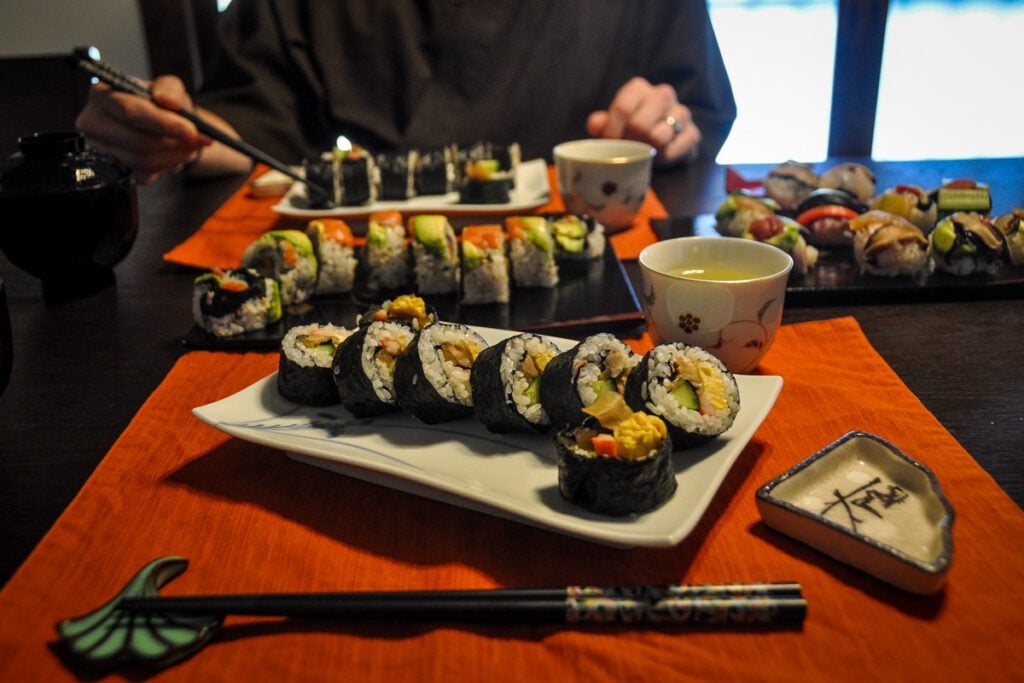
Kyoto has no shortage of incredible dining options.
From casual and inexpensive noodle shops to Michelin star restaurants, you can find both traditional Japanese fare and international cuisine.
Here are a handful of great places to eat in Kyoto.
- Saishuan Shiraki: cozy izakaya
- Monk: wood-fired pizzas featuring local ingredients (make reservations)
- Omen Restaurant: popular spot for udon noodles
- Ramen no Bombo: known for Tori Paitan, a popular style of ramen in Kyoto
- Hanasaki manjiro: fine-dining regional cuisine, set meals
- Honke Owariya: this famous soba (buckwheat noodle) shop is one of the oldest restaurants in Kyoto
- Blue Bottle Coffee: excellent coffee & food items, multiple locations but the “Kyoto cafe” spot is meant to be the best
- Kurasu Kyoto Stand: cozy coffee shop knowing for excellent coffee
- Yoshikawa: ryokan that is famed for its tempura meals (more info about dining here)
Best time to visit Kyoto
Japan experiences the full spectrum of all four seasons, with each one offering something unique.
Spring in Japan is world renowned for its legendary cherry blossom season, bringing in huge amounts of tourism. Autumn is popular for fall foliage with vibrant colors countrywide.
Winter brings clear skies, snow spots, and ideal onsen weather, whereas the summer heats things up across the country, perfect for hiking and exploring the country’s endless nature.
The ideal time to visit largely depends on your interests, preferences, and itinerary. We have a full breakdown of each season, plus pros and cons in our guide to the best time to visit Japan.
Tips for avoiding crowds in Kyoto
Kyoto is a popular tourist destination in Japan and all of the major attractions draw crowds (especially during cherry blossom season).
Start your days early
If you want to avoid getting stuck in a sea of tourists, we highly recommend you start your days early and avoid midday at the most popular places.
Seek out less popular places
Visit the top attractions, but also make an effort to get off the beaten track. We’ve included many things on this list that are not on the typical tourist itinerary.
Visit during “off” season
Traveling to Japan during cherry blossom season (usually mid-March through early May) is a dream for many people. However, it will be incredibly crowded throughout the country, especially in Kyoto, which is a popular cherry blossom destination.
If you aren’t into crowds (we get it!), we’d recommend traveling during off-peak season.
The summer months tend to be a bit less busy, but personally, we’re not fans of this time of the year, which tends to be very hot and humid. Plus, it can rain a lot.
Instead, we really enjoy visiting Japan in the winter. This season has fewer crowds, and it can be a fun time to soak in onsen, experience the country’s legendary skiing, and warm up with hot bowls of ramen.
Think hard about where you stay
Staying in the outskirts of the city can give you a more “local” experience, however, if it is your first time in Kyoto and you want to see all the major sights, it will take you much longer to get around the city. This means you won’t be able to arrive as early in the morning to the popular attractions in order to beat the crowds.
Our advice: If you are visiting Kyoto for the first time, we’d recommend staying in the Gion / Southern Higashiyama neighborhoods.
Jump to more info on where to stay in Kyoto.
How to get to Kyoto

There is no airport in Kyoto. The closest airport is Kansai Airport, which is located just outside Osaka. Thankfully, it is very easy to get to Kyoto from Kansai Airport, downtown Osaka and Tokyo.
For planning your routes, be sure to download the Japan Official Travel App for the most accurate times and up-to-date information.
Kansai Airport to Kyoto:
The easiest way to get from Kansai International Airport to Kyoto is to take the Haruka Train. It leaves once or twice an hour, only takes an hour and 26 minutes, and costs about ¥3,630 per ticket.
You can also take a regional train from the airport to Osaka or Shin-Osaka and transfer to another train heading to Kyoto. This will be about 2 hours and costs around ¥2,750 per ticket.
Osaka to Kyoto:
From Osaka Station, take a JR Tokaido line to Kyoto. They run about three times an hour so you will not have to wait long. It takes about 30 minutes to get there.
This train is included in the JR Pass so if you have the pass you don’t need to worry about purchasing a ticket. If you don’t have the JR Pass, it will cost ¥1,410 per ticket.
From Shin-Osaka, you can ride the Shinkansen Hikari train to Kyoto. It takes about 13 minutes total travel time and departs almost twice an hour (also included in the JR Pass). A regular fare for this train is ¥3,060.
Tokyo to Kyoto:
The best way to travel from Tokyo to Kyoto is by a Shinkansen bullet train. It takes about 2 hours and 39 minutes on the Hikari line and they leave once or twice an hour.
Did you know the price of the JR Pass is about the same price as a round trip ticket from Tokyo to Kyoto. If you’re doing this trip, you might as well buy a JR Pass and save the hassle of trying to get individual tickets throughout your entire trip.
You don’t have to worry about purchasing your train tickets with the JR Pass, but you will have to reserve your seats in advance at the train station for this trip since it is a very popular route.
How to Get Around Kyoto
Kyoto has an extensive public transportation system, making it easy to get around. There are two subway lines, the Karasuma Line runs north to south and the Tozai Line runs west to east.
You can use an IC Card, like an ICOCA card, to get on and off most public transportation. You can purchase and recharge these cards near the train station and some convenience stores.
There is a network of bus lines throughout the city as well. If you are planning on exclusively using buses, you can purchase a 1-day pass and ride as many as you want for 24 hours. You might want to ask your hotel front desk which pass or card would be best for your time, location, and all the things you want to do in Kyoto.
Where to stay in Kyoto
There are many incredible places to stay in Kyoto for travelers of all budgets. Below are our top picks for hotels, hostels, and Airbnbs.
We’ve selected some that are higher-end as well as several that are for travelers on a budget.
Our advice: If you are visiting Kyoto for the first time, we recommend you stay in the Gion and Southern Higashiyama districts.
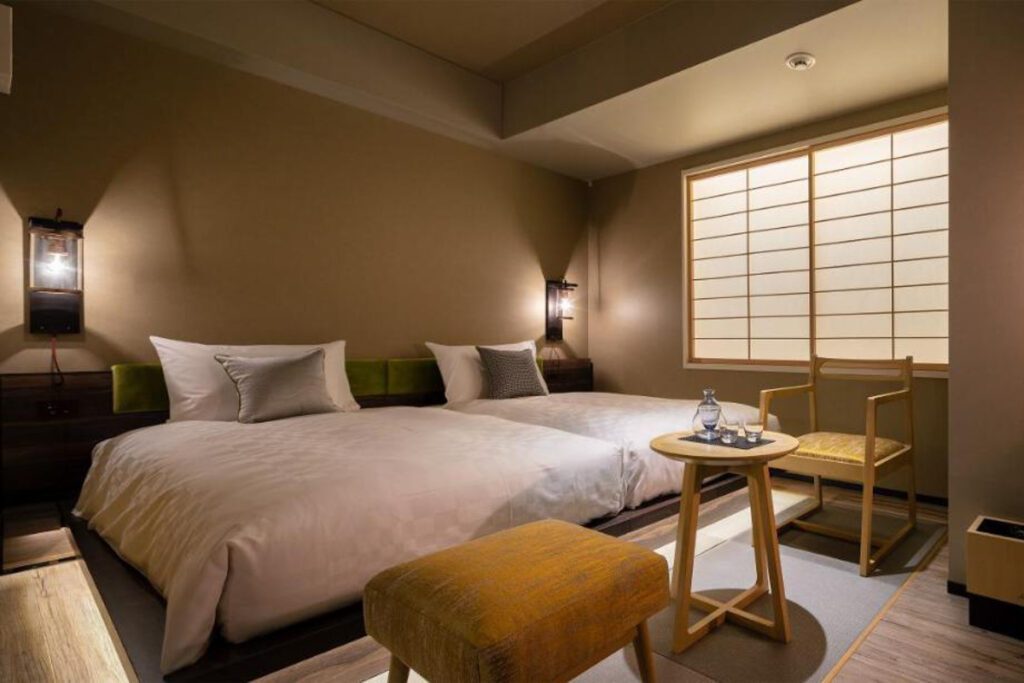
Best Budget Hotel: Hotel Resol Kyoto Kawaramachi Sanjo
This 3-star hotel is situated in the center of Kyoto and conveniently located next to the train station. Steps away are many popular shopping and dining areas, as well as popular Kyoto attractions.
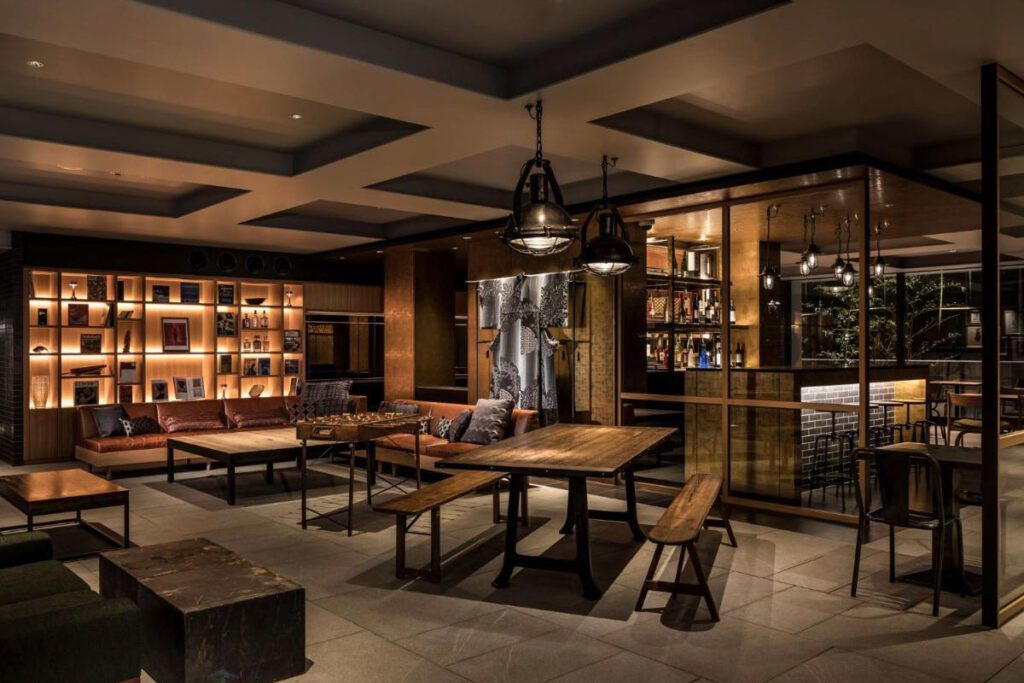
Luxury Pick: Kyoto Granbell Hotel
Stay walking distance away from all the top things to do in Kyoto while having full access to this hotel’s impressive amenities: onsite bar, restaurant, bicycle rentals, public bath, and maiko shows twice a week.
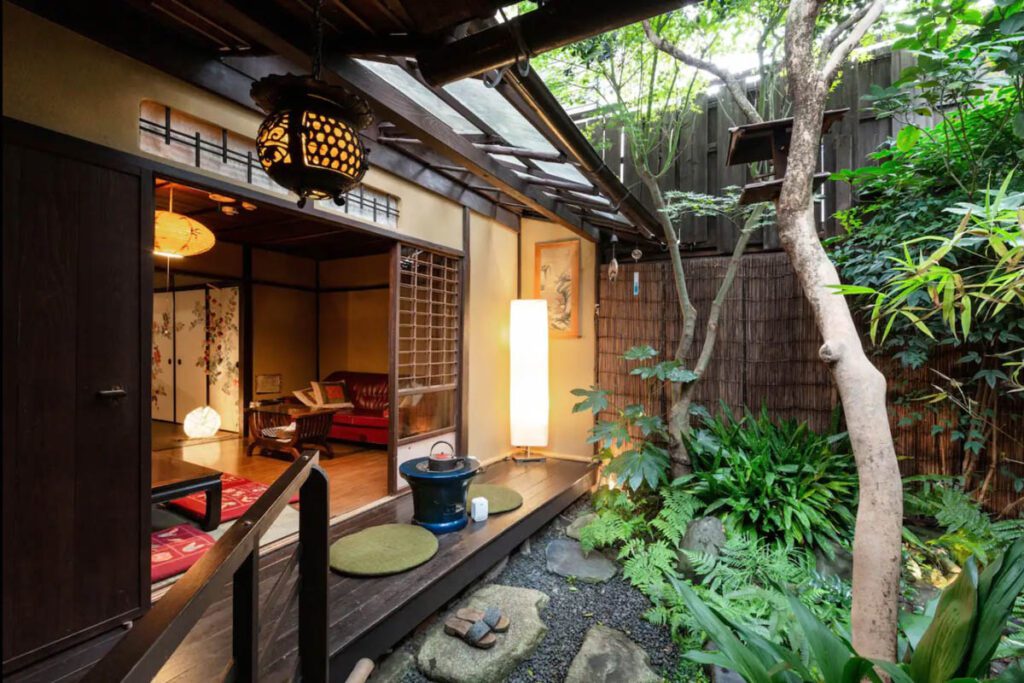
Budget Airbnb: 100 Year old Machiya Guest House
This charming guest house transports you back in time with its tatami interior and traditional Japanese garden onsite. Enjoy peace and stillness while still being close to many shops, stalls, and sites in Kyoto.
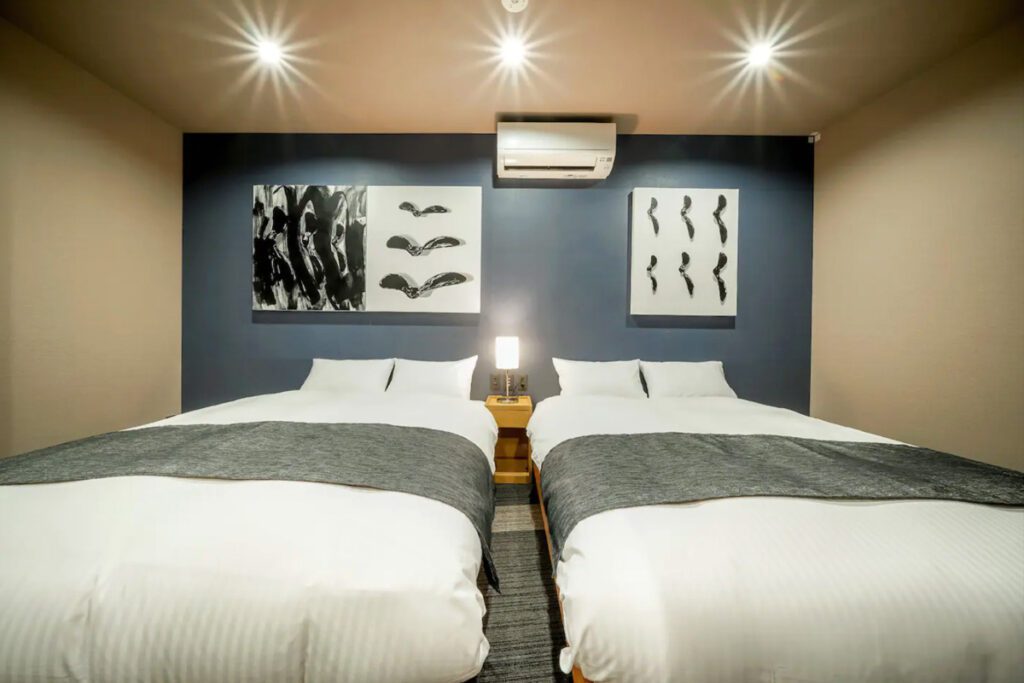
Luxury Airbnb: MaikoTown
Tradition meets modernity at this stay in the heart of the city. You can uncover many parts of the city others miss as it’s located down a quiet street lined with teahouses, but still close to many shops and restaurants.
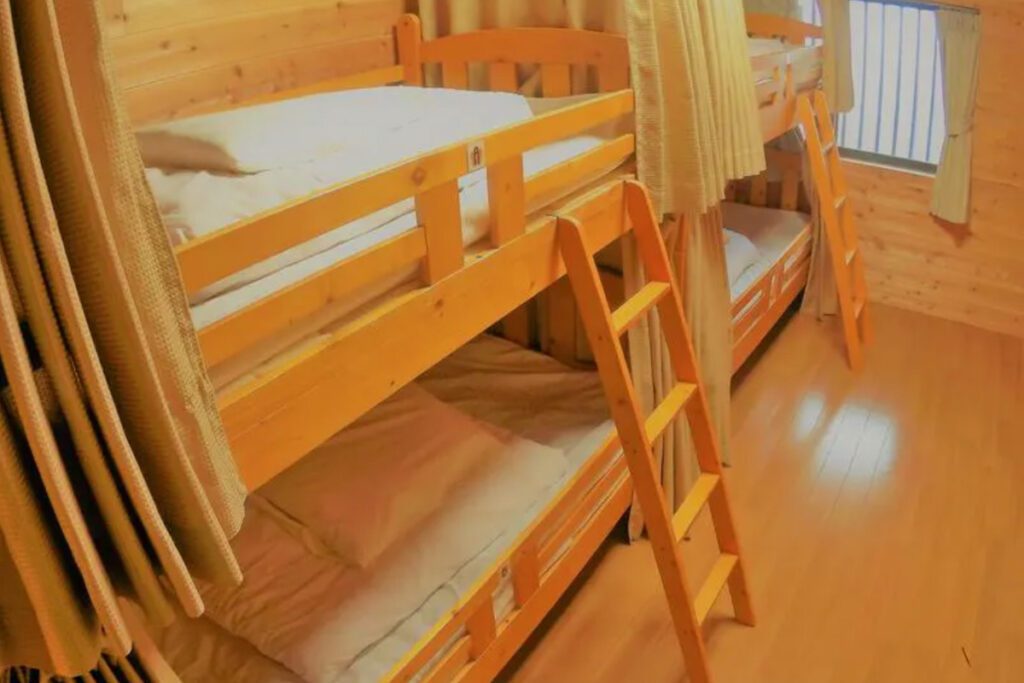
Best Hostel: Guest House Ga-Jyun
Stay in one of the most famous areas of Kyoto that’s close to temples, shrines, and the subway station. The ancient traditional Japanese house is cozy, convenient, and the ideal budget stay while in the imperial city.
Plan your trip to Japan
After 3 trips (and counting!), we’ve fallen head over heels for Japan—and we’ve created TONS of resources to help you plan your dream trip. Start with our Ultimate Japan Travel Guide and be sure to check out these helpful articles:
- First time? Our Japan Trip Planner walks you through everything you need to know.
- Use our Japan Rail Pass guide to determine if getting a train pass is optimal for your trip.
- Here’s our curated list of the best things to do in Japan—from iconic sights to once-in-a-lifetime experiences.
- Not sure where to go? Our Japan itinerary ideas will help you map it all out.
- Foodies, rejoice! This guide to what to eat in Japan will have you drooling before you land.
- This guide to what to wear in Japan (and what not to wear) will help you blend in.
- Use our ultimate Japan Packing List to make sure you don’t forget anything.
- Before you go, brush up on these essential Japan travel tips (including major do’s and don’ts!).
- Avoid awkward moments by brushing up on Japanese etiquette.
Still have questions? Drop us a comment—we LOVE helping travelers plan unforgettable trips to Japan!
Want to save time and energy on planning?
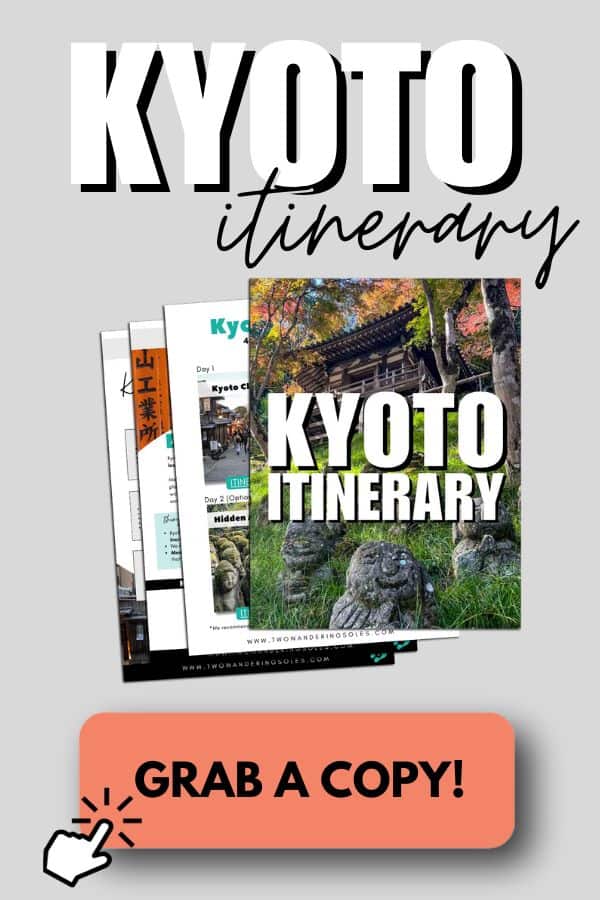
We’ve spent hundreds of hours (no joke!) researching for our 3 different trips to Japan, and we’ve been able to explore a lot of what this country has to offer!
We’ve compiled our experience to create the perfect trip for adventurous travelers that want to see iconic sights and hidden gems in the beautiful city of Kyoto, Japan.
This done-for-you itinerary is everything you need with 4 fully planned interchangeable days!
Just click the banner to get your Kyoto itinerary today!
Don’t miss your chance to grab our Kyoto map!
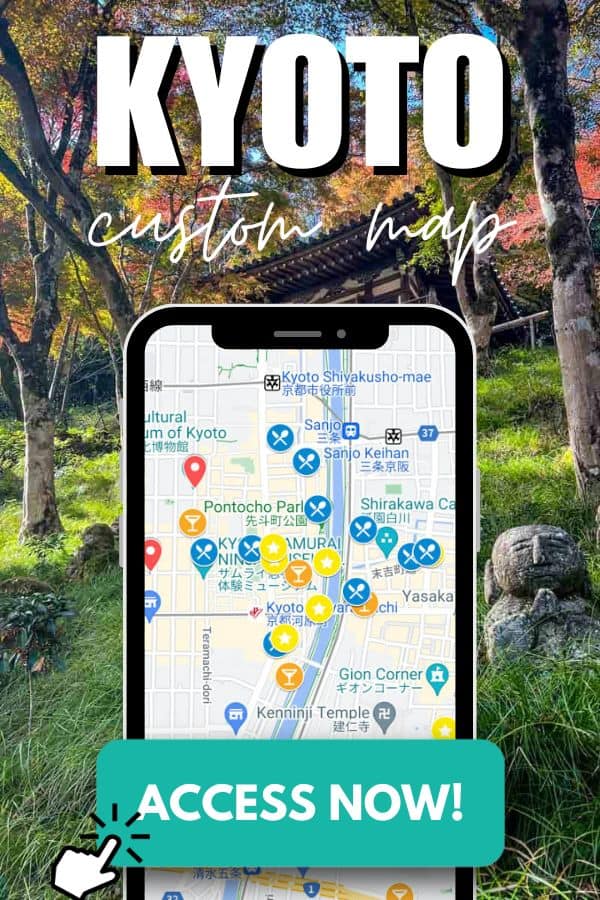
Get our custom Kyoto map sent straight to your phone! We loaded this map with all our favorite restaurants, sights, hidden gems, and more, so you can make the most of your time in Kyoto.
Just enter your email and we’ll immediately send you access instructions!
Save this article on Pinterest for later!

We want to hear from you!
What do you think about this list of things to do in Kyoto, Japan? What would you add to the list? Do you know of any other hidden gems? Do you have any questions about traveling in Kyoto? Let us know in the comments below!

Katie Diederichs is the lead writer and co-founder of Two Wandering Soles, where she creates in-depth travel guides, itineraries, and tips designed to help readers plan better trips with confidence. With a background in journalism, photography, and design, she combines thorough research with firsthand experience to deliver clear, practical, and visually driven travel content. As the primary trip planner, Katie turns complex logistics into easy-to-follow advice travelers can actually use.
Very well written
Thanks for sharing