
Despite it’s frosty name, Iceland experiences four distinct seasons, each with its own unique draw for visitors. We’ll go over the pros and cons of each season to figure out when is the best time to visit Iceland for your travels.
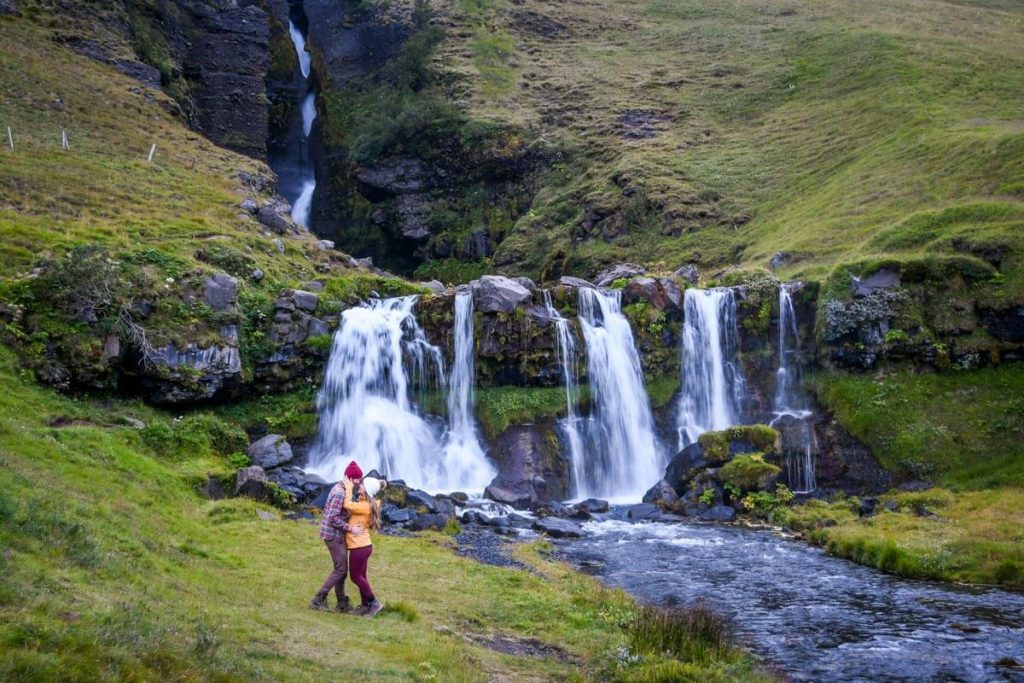
Iceland may not be quite as icy year-round as its name suggests. However, it still experiences four distinct seasons, each with its own unique draw for visitors.
You’ll see migrant birds returning to the coastal areas during the spring, hiking, whale watching and music festivals draw crowds in the summer, autumn brings with it the best time for Northern Lights viewing, and powdery snow covers the land for epic snow activities come wintertime.
The truth is, there are plenty of exciting things to do in Iceland all year round.
So this begs the question…
When is the best time to visit Iceland?
In general you’ll have the best weather, and most opportunity for hiking and outdoor activities during the summer months, from June – August. If viewing the Northern Lights is what you seek, visiting during the shoulder seasons of September – October and February – March are when we’d recommend.
Truthfully, the answer is so much more complicated than that. The best time to visit Iceland might be different depending on what kind of traveler you are and what you hope to do and see while you’re there.
Each season has its own unique draws (and drawbacks too).
We’re going to go over the pros and cons of visiting Iceland during each season to help you decide which time of year is ideal for YOU.
Best time to visit Iceland guide
- Our experience
- Questions to ask yourself
- Iceland geography overview
- Weather in Iceland
- Summer in Iceland
- Fall in Iceland
- Winter in Iceland
- Spring in Iceland
- What to pack for Iceland
- FAQs about when to visit Iceland
- Perfect Iceland itinerary
- Iceland map: our favorite spots!
Overall BEST time to visit Iceland
Want a quick recommendation? Jump down to see our personal advice for the best time to visit Iceland. Plus, we’ll share what times of year we’d avoid visiting!
Our experience
We’ve visited Iceland in both summer & winter
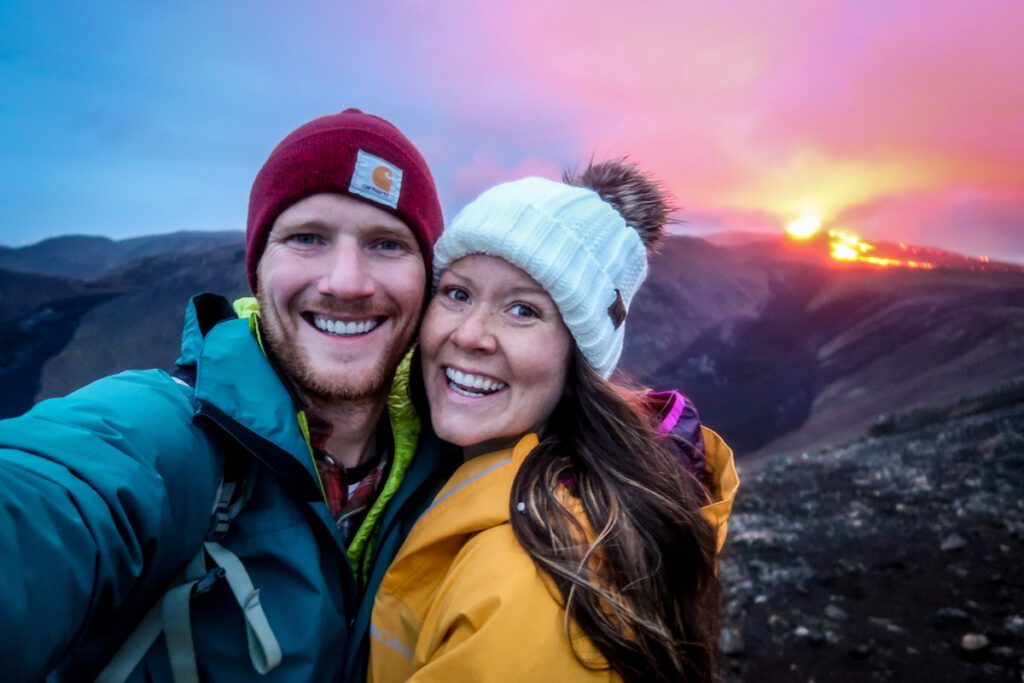
Summer
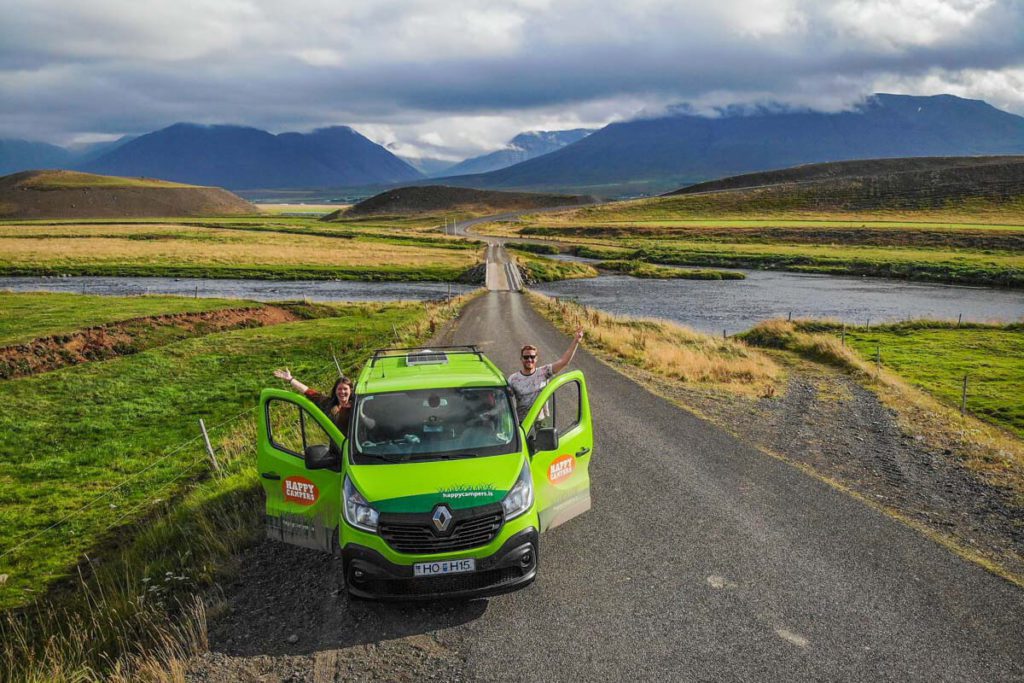
When: mid-August (both in 2016 & 2021)
Type of trip: both times were road trip on the Ring Road; in 2016 we were tent camping and in 2021 we rented a campervan
Our experience:
- We needed to book tours and accommodation well in advance because this is the busiest time of the year.
- Even though this is one of the busiest months, the crowds in Iceland aren’t bad compared to most other European cities.
- Most crowded places are in Reykjavik, the Golden Circle, and Vik.
- Both times we visited in August, we lucked out and got a weather window where the northern lights were visible (not super vibrant, but a good surprise!)
- First trip we got zero rain, second trip we got a handful of rainy days
- Had a couple of very hot days, but mostly cool weather
- The sun set after 10 p.m. and rose before 5 a.m., so we had lots of daylight for long days of exploring!
Watch our summer road trip in Iceland come alive…
Would we recommend visiting Iceland in August?
Yes! I think it’s truly one of the best times of the year to travel to Iceland.
If you have flexibility, I think early to mid-September would be nice as well and the crowds will start thinning (prices may start to decrease a bit too). Some seasonally-open businesses close shop in September or October, so do a little research before choosing.
Winter
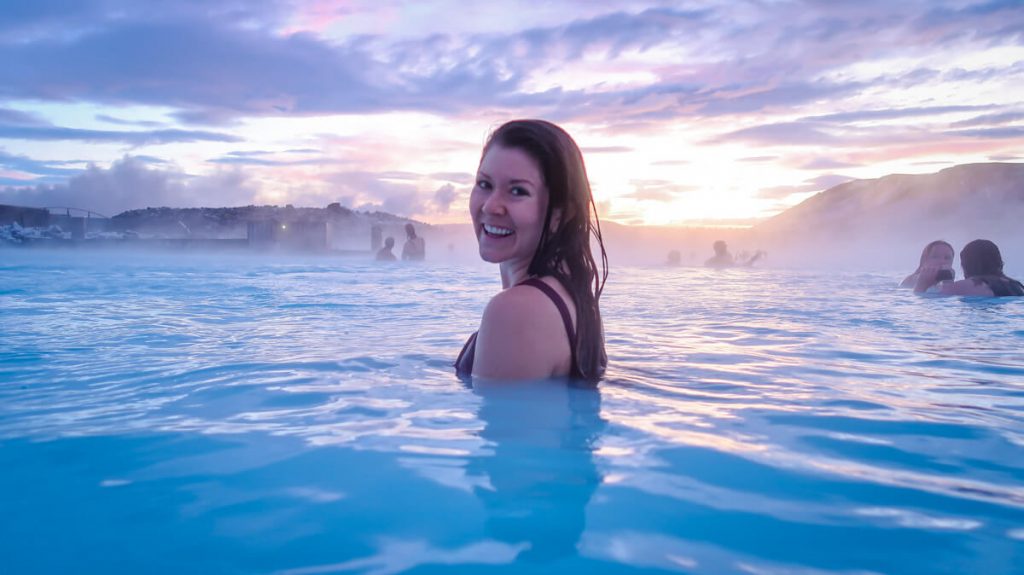
When: mid-December (2019)
Type of trip: 2-day stopover coming home from a European Christmas market trip
Our experience:
- Way fewer tourists than in summer
- Much cheaper hotel rates
- Only a handful of hours with daylight makes exploring difficult
- Very cold and dark
- Many places outside of Reykjavik are closed in the winter
- I drove a car and the roads were fine (but I was mostly around the Reykjavik and Keflavik areas)
- Cloudy skies made it impossible to see the northern lights while we were there
- Blue Lagoon at midday was a cool experience because we saw the sun rise and set all within a few hours
Would we recommend visiting Iceland in December?
It depends. I wouldn’t recommend winter if it’s your first trip to Iceland and you want to see a lot on a road trip. With very little daylight, it’s hard to do much exploring during the day.
It can make a great stopover trip on your way to or from Europe’s Christmas markets (this is what I did!). And if you get lucky, you may be able to see the northern lights!
When is the best time to visit Iceland for YOU?
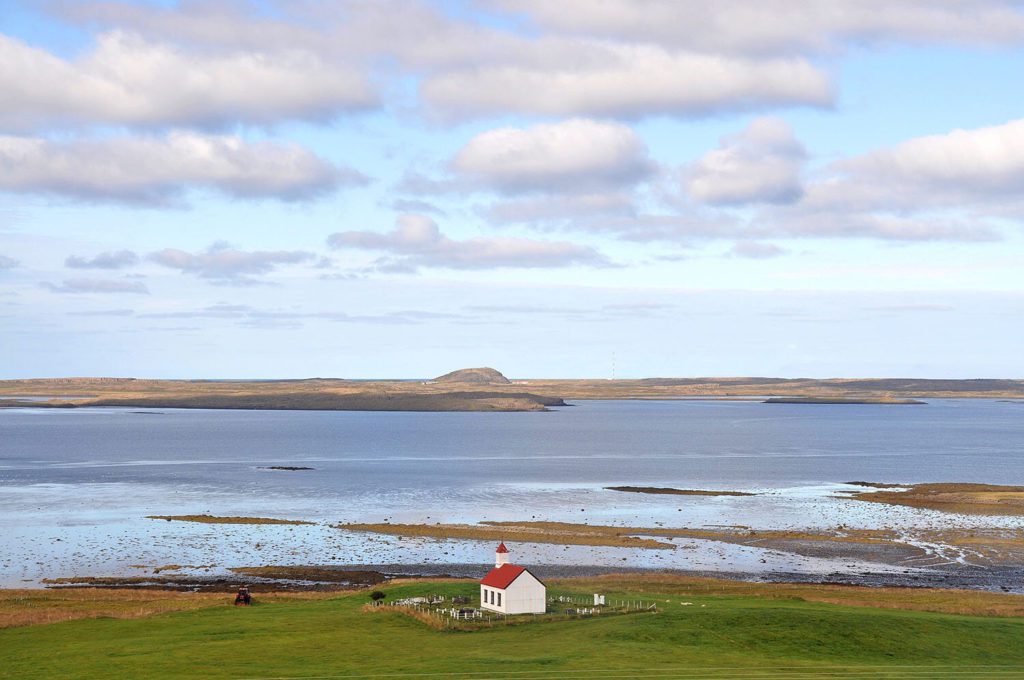
Thinking about your answers to the following questions is going to help you start to determine when to visit Iceland:
Do you mind cold weather?
While you’ll have chances of cold weather year round (yes, even in the summertime!), you’ll mostly likely want to avoid winter if you don’t do well in frigid temperatures.
Are you planning to road trip around Iceland?
Some attractions and businesses are only open in the summer months. If there are certain things you really want to do in Iceland, be sure you know whether or not they’ll be open or accessible during the season in which you plan to visit.
Also, driving during the winter may mean some roads are icy or have a layer of snow. Be sure you feel comfortable with this before renting a car in Iceland for a winter trip.
Luckily Iceland’s famous route for circumnavigation is open in all seasons and you can road trip Ring Road all year round.
Are you on a budget?
Consider avoiding peak season (aka the summer months) to save quite a bit of money. We’ve got plenty more budget tips for Iceland to help you plan your trip.
Are you hoping to get a glimpse of the Northern Lights?
You’ll have the best chance of spotting them during the winter months. That said, you may get lucky and see them at other times of the year (with the exception of mid-May through mid-August).
Do you plan to do a lot of hiking?
Many popular Iceland hiking trails are only accessible during the summer months. Be sure to account for this if you plan to do a lot of hiking on your trip to Iceland.
What kind of wildlife are you hoping to see?
Puffins and whales, for instance, have certain “seasons” for spotting them.
Do the daylight hours affect your sleep, either not having enough light or having too much light?
If you visit in the summer, expect to fall asleep while it’s light outside. And on the flip side, wintertime in Iceland comes with long hours of darkness.
What is the purpose of your trip to Iceland?
Are you in Iceland on a layover and exploring Reykjavík in 1 day? If so, you could really find things to do in any season.
Or are you planning a big hiking and camping adventure in Iceland? If this is the case, summer is going to be a much more comfortable time of year to travel.
Iceland geography overview

Located just below the Arctic Circle Iceland is an island national in the North Atlantic, situated on one of the earth’s so-called “hot spots.” The country sees lots of geothermal activity, including hot springs, geysers, mud pools, volcanos, and the occasional earthquake.
Iceland is also one of the few places on Earth where the North American and Eurasian tectonic plates meet above sea level—slowly pulling the country apart. At Þingvellir National Park, you can even snorkel or dive between the two continents in the Silfra fissure.
Sitting on top of a volcanic plateau, the vast majority of the country is an arctic desert. Known as “the Land of Fire and Ice,” glaciers cover over 11.5% of the country (4,600 sq. miles!).
The rest of topography across the country varies from mountains and lava fields to black sand beaches and fjords, with lots and lots of waterfalls dotted in between. Most of the vegetation and agriculture is in the lowlands near the coast.
Weather in Iceland
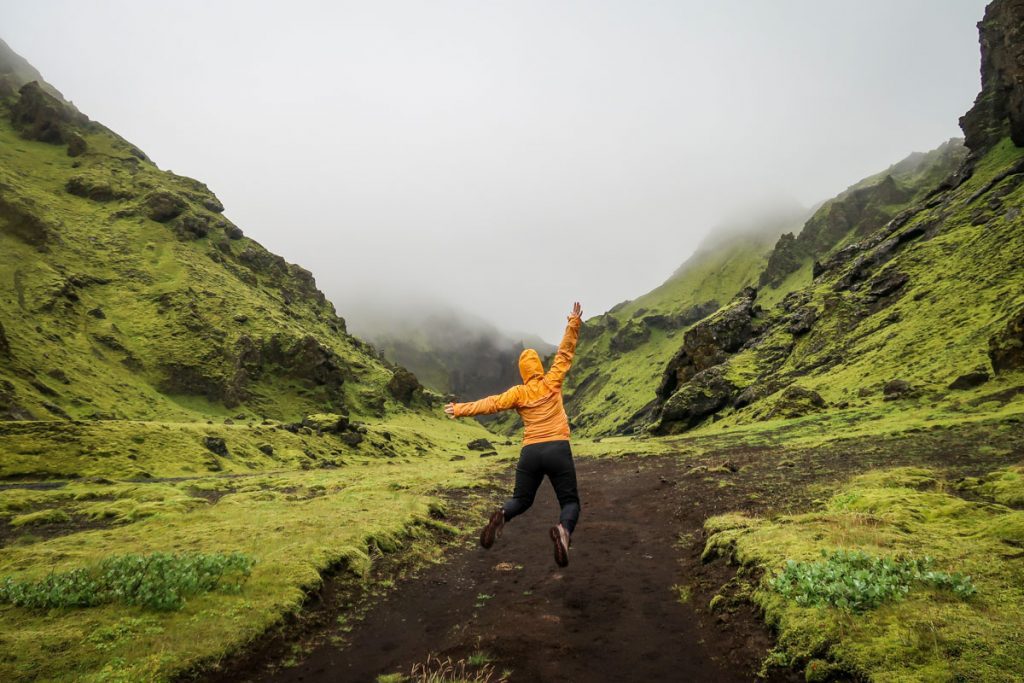
Weather is going to vary throughout the year, but in general, Iceland has a more mild climate than its name implies…
Thanks to the warming effects of the Gulf Stream, Iceland has a temperate climate year round. The country experiences cool summers and mild winters where the temps rarely drop much below freezing.
However, Iceland is infamous for its unusually volatile shifts in weather. It is not uncommon to experience all four seasons in one day. This is because the Gulf Stream brings mild Atlantic air (all the way from the Caribbean) in contact with the chilly Arctic air, which causes sudden and frequent shifts in the weather.
There is a popular saying with the locals you are sure to hear while visiting Iceland that says, “If you don’t like the weather, just wait 15 minutes.”
Precipitation peaks from October – February with the southern and western parts of the country receiving the most rainfall.
Wind is also a big factor of the weather in Iceland and is a constant year round. You should always be prepared for the wind to pick up at any moment, and exercise caution while driving in high velocity winds.
Stats on the weather in Iceland
- Warmest month in Iceland: August
- Coldest month in Iceland: February
- Rainiest month(s) in Iceland: Oct – Feb
- Driest month(s) in Iceland: Jun – Jul
- Most crowded month(s) in Iceland: Jun – Aug
- Least crowded month(s) in Iceland: Nov – Feb
Read Next:

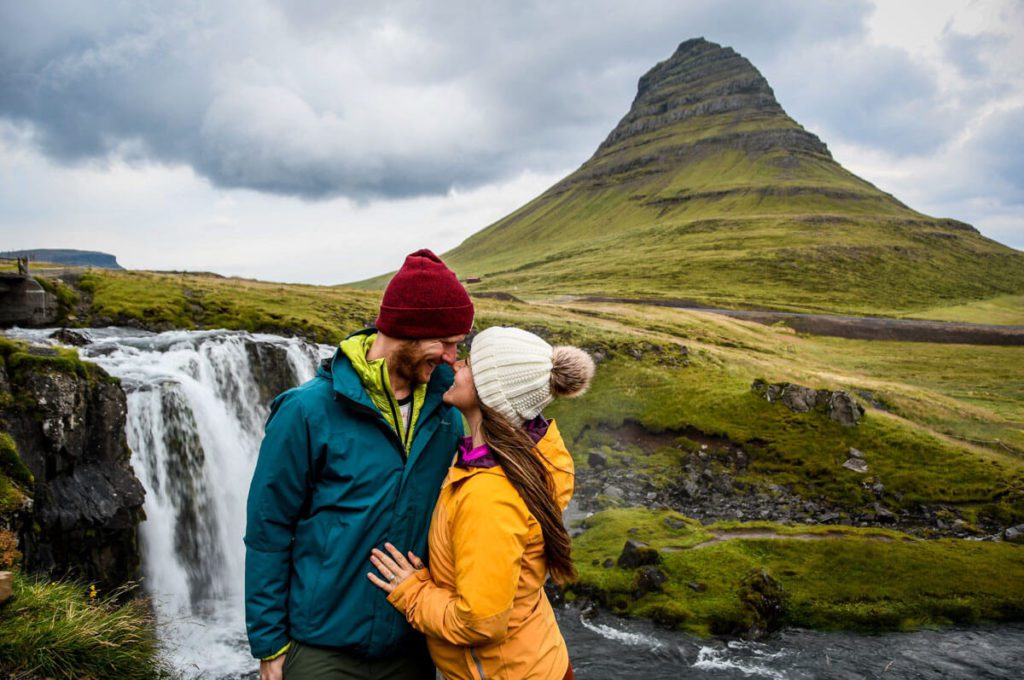
Summer in Iceland

Summer just below the arctic circle means long daylight hours and warmer temperatures. The midnight sun sheds 24 hours of daylight on the land surrounding the summer solstice in June. Meadows turn bright green and livestock roams the countryside.
Highland roads (F-roads) open up after being closed all winter. This makes summer the best time for serious hikers to visit as all the famous trails that will be accessible.
The best months for whale watching are June and July. The north enjoys visits from humpbacks, minkes and dolphins from May – August and a few humpbacks even stick around until the end of the year. Blue whales are spotted passing through in June.
Summer is also Iceland’s peak tourism season and travelers should look at booking well in advance to secure accommodation, tours and transportation.
Summer months at a glance:
- June: Summer solstice is on June 21, the longest day of the year in the northern hemisphere. This is the start of the busy season as temperatures are warming up and schools are going on break.
- Average Daylight Hours in June: 20-21 hours
- July: Peak tourism season and probably the busiest month in Iceland. July also sees the warmest temperatures and best weather.
- Average Daylight Hours in July: 21-18 hours
- August: The weather is still warm and tourism booming during August, although the days are getting slightly shorter.
- Average Daylight Hours in August: 18-15 hours
Best places to visit during summer in Iceland
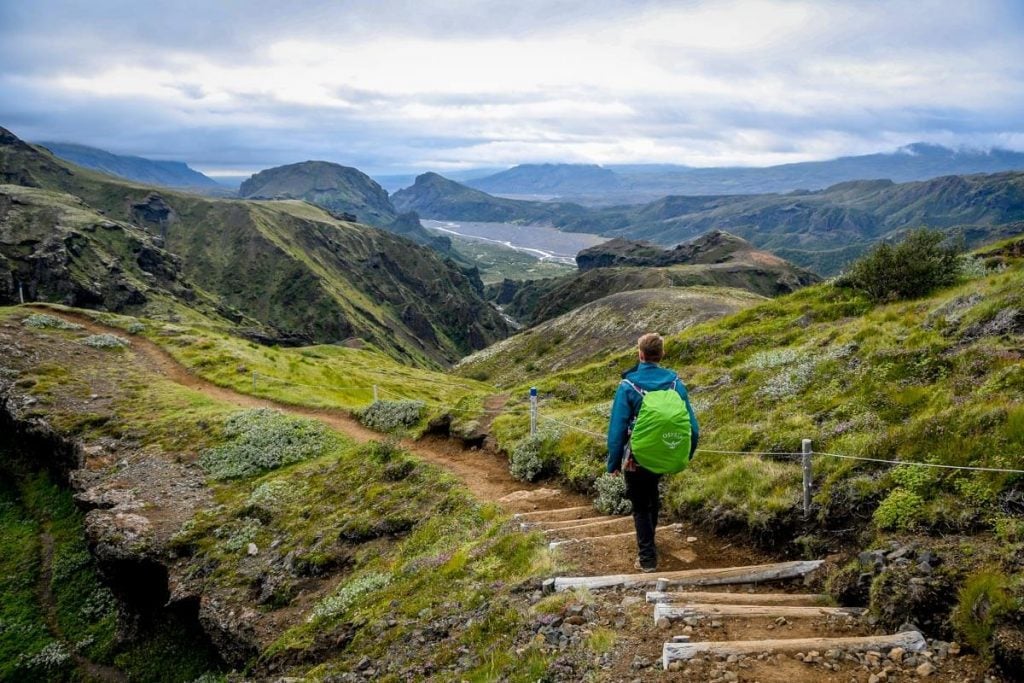
- Valley of Landmannalaugar: only accessible during the summer or by tour during the winter
- Þórsmörk Valley: also only accessible during summer
- Silfra fissure for diving/snorkeling
- Seljalandsfoss waterfall at sunset: best seen on a clear day during golden hour
- Stuðlagil Canyon: summer is your best chance to see the river in its striking shade of blue
- Sólheimasandur plane crash: go during “after hours” with the midnight sun to avoid the crowds
- Moss-covered Eldhraun Lava Field
- Fjaðrárgljúfur: grassy canyon valley
→Psst! Looking for some more ideas of romantic things to do? We’ve got you covered with our Iceland Honeymoon guide!
Best things to do during summer in Iceland

- Hiking the Icelandic highlands: Laugavegur and Fimmvörðuháls (accessible only during July and August)
- River rafting
- Chasing (Iceland) waterfalls
- Whale watching
- Midnight golfing – it’s a thing, look it up!
- Go camping
- Sjomannadagurinn (Seamans’ Day) on the first weekend of June celebrates the importance of fishing to Icelandic life.
- Culture Night: August in Reykjavík
- Secret Solstice Music Festival: June in Reykjavík
Planning a summer trip? That’s the best time for the Ring Road — long days, most roads open, and peak season for campervans. One heads up: campervans and accommodations book out fast for June-August. Our Ring Road itinerary includes daily accommodation picks so you know exactly what to reserve in advance. See what’s inside the Ring Road Itinerary →
Summer is the best time to visit Iceland if…
- …you don’t mind crowds too much.
- …you want plenty of daylight and warmer temperatures.
- …you want to do lots of hiking in the highlands.
- …you want to experience the midnight sun.
- …you want to see Iceland looking lush & green.
- …you can make your bookings well in advance.
- …you have a bigger budget to work with.
Fall in Iceland
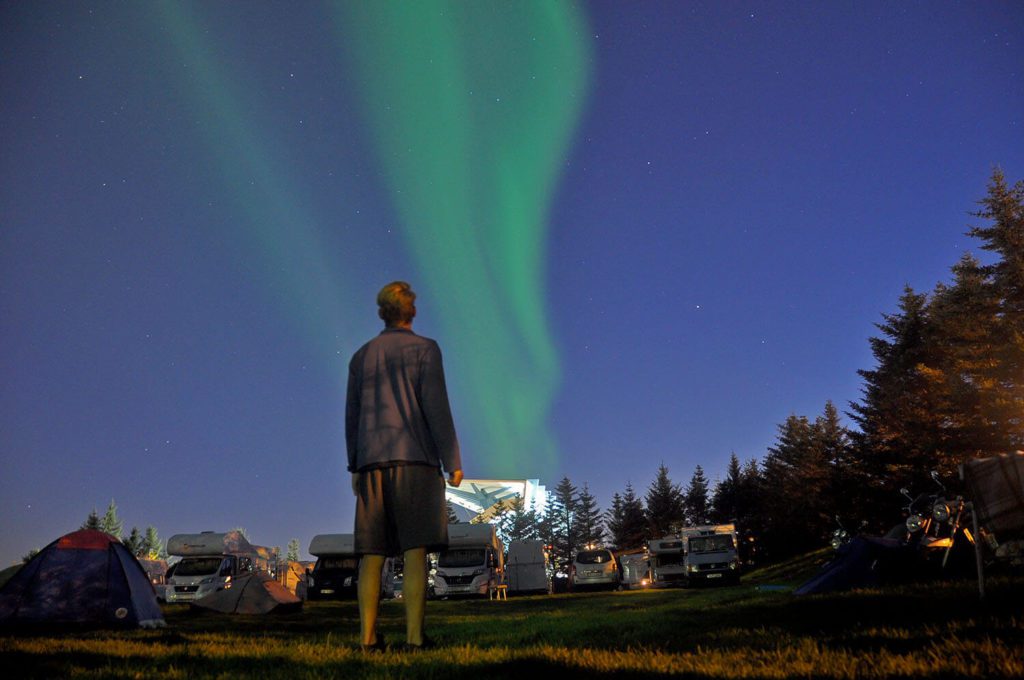
With autumn in Iceland comes cooler temperatures and the beginning of Northern Lights viewing season. While Iceland doesn’t experience the changing of the leaves like other parts of the world, moss growing on volcanic lava formations gives nature an added splash of fall color.
September and October are the best months to check out the hot springs and hidden “hot pots” around Iceland as the mountain roads are usually still open, but the crowds have dwindled significantly.
Autumn experiences similar temperatures to the spring in Iceland, but may feel windier in comparison. However, the daylight hours are still pretty normal, so this shoulder season makes for a good time to visit without as much crowds.
Fall months at a glance
- September: Temperatures are still fairly warm in September, and most of the crowds have thinned as children return to school.
- Average Daylight Hours in September: 15-12 hours
- October: It’s starting to get colder during the second half of the month as we get into full “shoulder season” where crowds have dwindled. You might even see the first snowfall this month.
- Average Daylight Hours in October: 12-8 hours
Best places to visit during fall in Iceland
- Blue Lagoon
- Earth Lagoon Myvatn
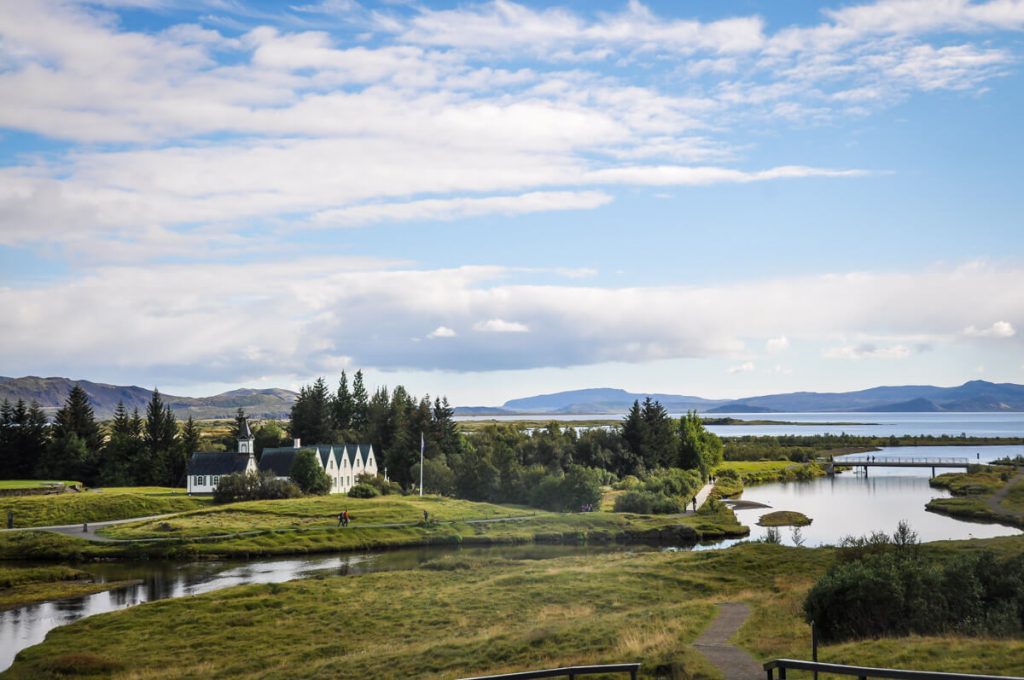
- Thingvellir National Park – bathed in color!
- Most popular waterfalls: Dettifoss, Gullfoss, Seljalandsfoss, Svartifoss, Skogafoss, and Goðafoss
Best things to during fall in Iceland
- Catch a glimpse of the Northern Lights – best seen in Sept & Oct during the fall
- Drive the Golden Circle
- Road trip Ring Road around the entire country
- Witness a roundup – when the farmers start to gather their sheep and horses in for the winter
- Reykjavík Film Festival – September
→ Thinking about renting a car to do a road trip? Check out our ultimate guide to planning your Iceland road trip to find all the info you’ll need!
Fall is the best time to visit Iceland if…
- …you are seeking hot springs and “hot pots” around the country.
- …you are hoping to catch a glimpse of the Northern Lights.
- …you prefer fewer crowds.
- …you enjoy cool and crisp air.
- …you want to plan a road trip around Ring Road.
Winter in Iceland

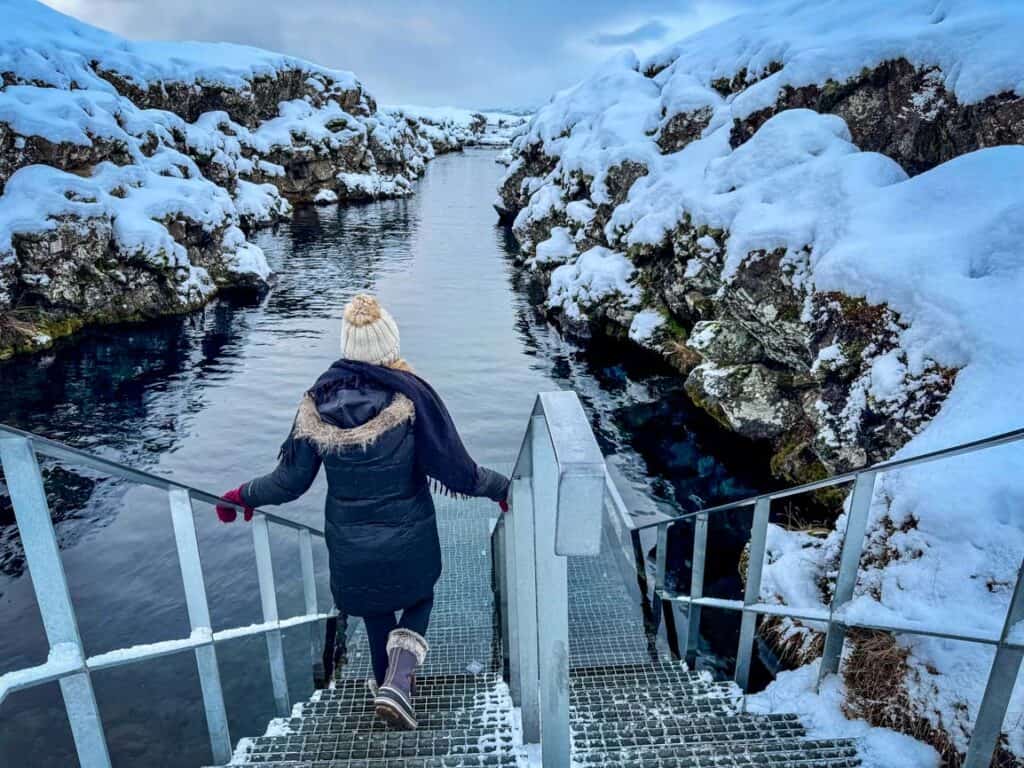
Winters in Iceland are milder than you might expect, with temperatures similar to NYC or Hamburg.
Snow can fall from October to April but rarely sticks around for long, making it a great European winter vacation if you don’t mind limited daylight. The long, dark nights are ideal for Northern Lights viewing, though sightings are never guaranteed.
While short days can be challenging for photographers and outdoor adventurers, the low winter sun creates beautiful golden light, and winter is the only season when ice cave tours are available.
Road conditions can be tricky, many F-roads close, and winter isn’t ideal for hiking or road trips. On the plus side, orcas are often spotted around the Snæfellsnes Peninsula, especially in February and March.
Winter months at a glance
- November: The days are getting shorter as the winter solstice approaches. Winter activities such as snowmobiling and glacier hiking are becoming quite popular.
- Average Daylight Hours in November: 8-5 hours
- December: December is the peak of winter solstice which means the darkest/shortest days of the year in the northern hemisphere. There can be as little as 4-5 hours of daylight in Iceland during December.
- Average Daylight Hours in December: 5-4 hours
- January: New Years celebrations kick off the start of the year in January. The days are once again beginning to get longer, and the Icelandic people do not let the cold stand in their way of participating in all sorts of outdoor activities in the snow.
- Average Daylight Hours in January: 5-7 hours
- February: Iceland is covered in a white blanket of snow making this a beautiful time of the year to explore some of the natural wonders. Northern Lights viewing is best during February and March.
- Average Daylight Hours in February: 7-10 hours
- March: Still wintertime in Iceland, March is another great month for viewing the Northern Lights. The daylight hours begin to increase and the locals are getting ready for spring.
- Average Daylight Hours in March: 10-14 hours
Best places to visit during winter in Iceland
- Snaefellsnes Peninsula for orca sighting
- Strokkur geyser – erupts every 10 minutes and you can really feel the heat in the wintertime
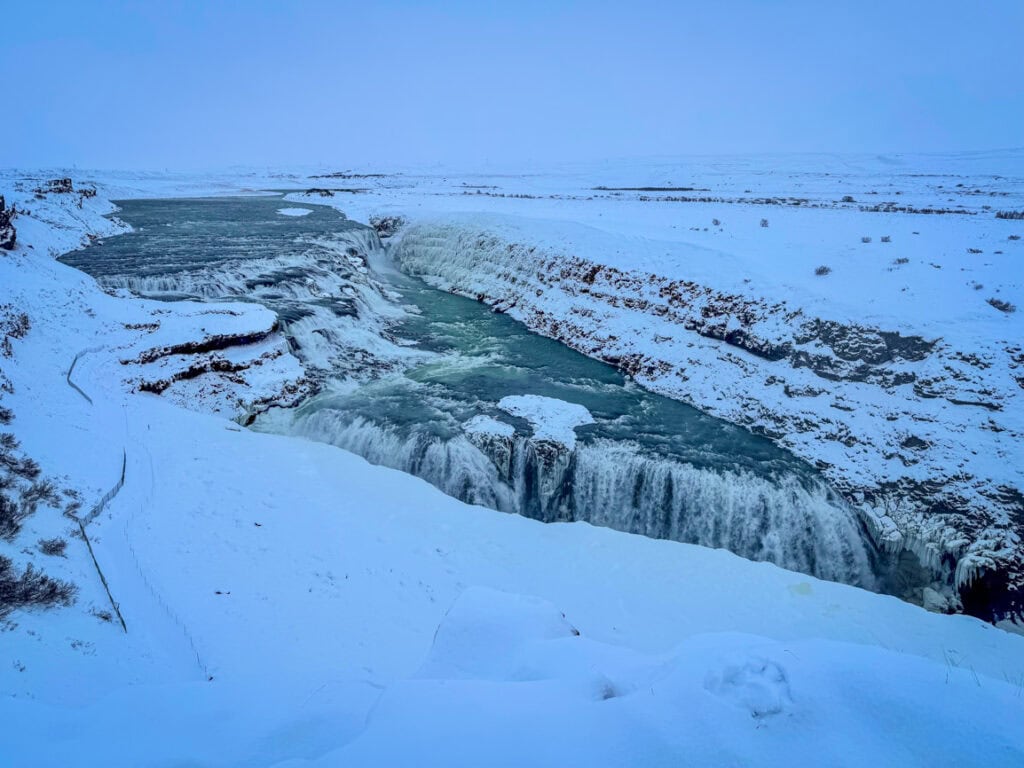
- Gullfoss Falls – In the winter, Iceland’s iconic rocky fields become flat white sheets and the falls themselves form icy chunks at the edges.
- Svinafellsjökull Glacier
→ Wondering what to budget for a week in Iceland? We’ve got you covered with our full Iceland budget breakdown.
Best things to do during winter in Iceland
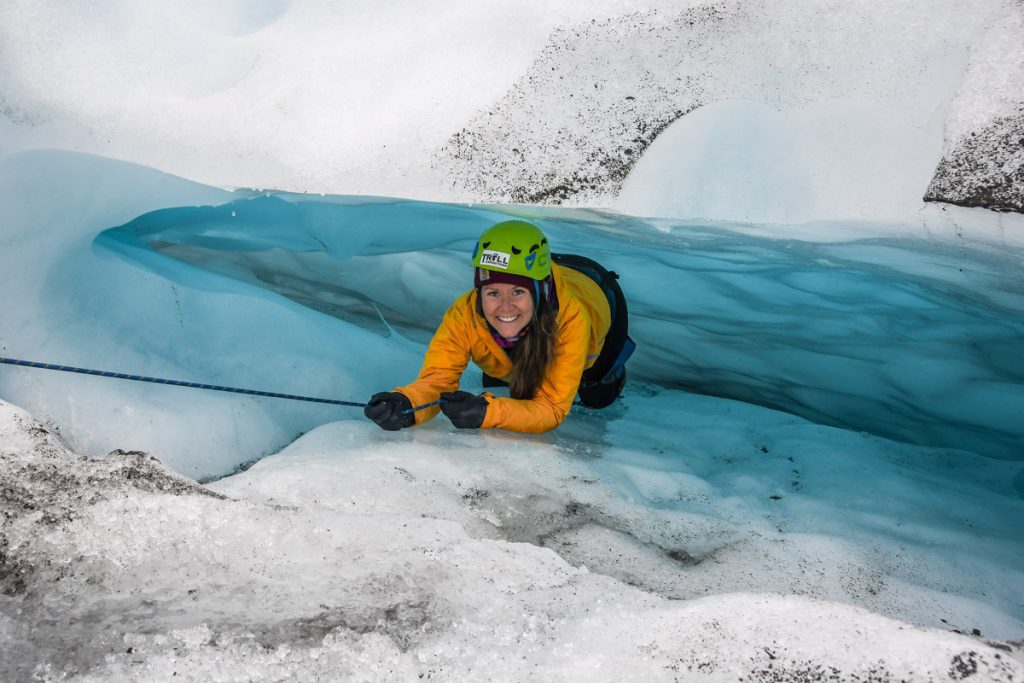
- Glacier hiking
- Snowmobiling
- Viewing/photographing the Northern Lights – best seen in Feb & March during the winter
- Horseback riding, hot springs and lagoons, and other snow activities
- Orca watching (Feb – March)
- Ice cave tours
- New Years Eve celebrations around Reykjavík
- Winter Lights Festival – February in Reykjavík
- Iceland Airwaves – November in Reykjavík
Winter is the best time to visit Iceland if…
- …you’re not a morning person (less daylight hours means the sun doesn’t rise until almost mid-day!)
- …you don’t mind colder temperatures.
- …you want to avoid the crowds.
- …you hope to view the Northern Lights.
- …you want to go inside an ice cave.
- …you want to save money and travel during the off-season.
Spring in Iceland
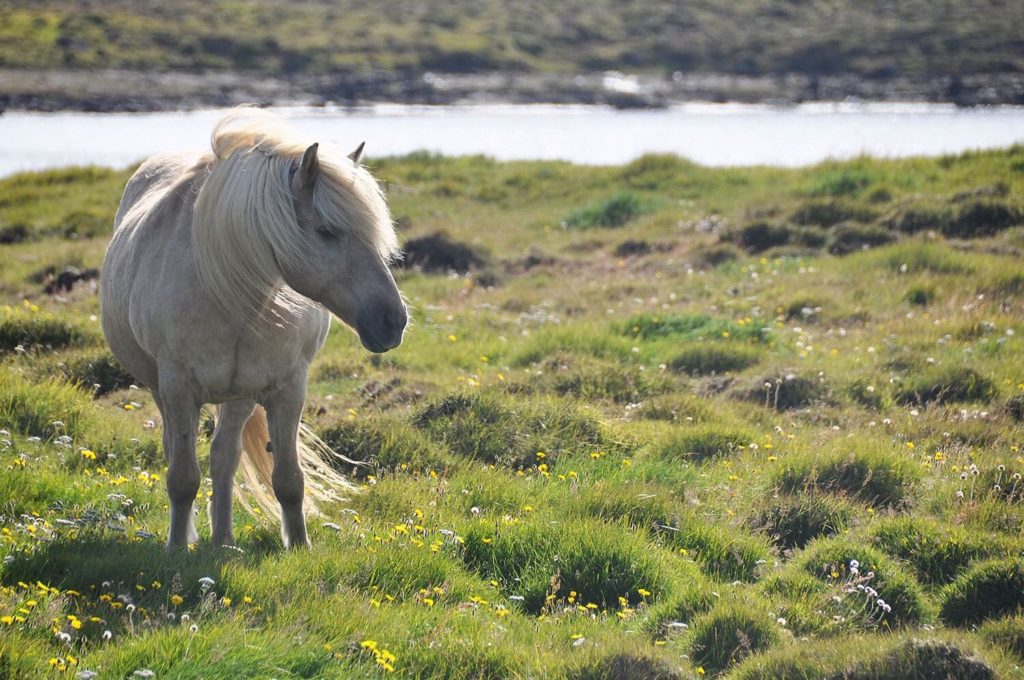
The snow is melting and rain and wind are the primary weather patterns during the spring in Iceland. However, you will get the occasional clear and sunny day.
Temperatures start to warm up and nature comes back to life. Migrant birds, such as the puffin, start returning to the coastal areas and bird-viewing becomes a popular activity.
April through May is the spring shoulder season in Iceland. It is still possible to catch the Northern Lights, however, your chances of a good viewing are significantly decreased as the days get longer.
Spring months at a glance
- April: Icelanders celebrate the official first day of summer on the first Thursday after the 18th of April, which is a public holiday. Although the weather will likely have you guessing it’s the first day of spring.
- Average Daylight Hours in April: 14-17 hours
- May: Ample daylight for sightseeing and temps are beginning to warm up. However, some of the roads remain closed as they are still thawing out from the winter’s snow and ice cover.
- Average Daylight Hours in May: 17-20 hours
Best places to visit during spring in Iceland
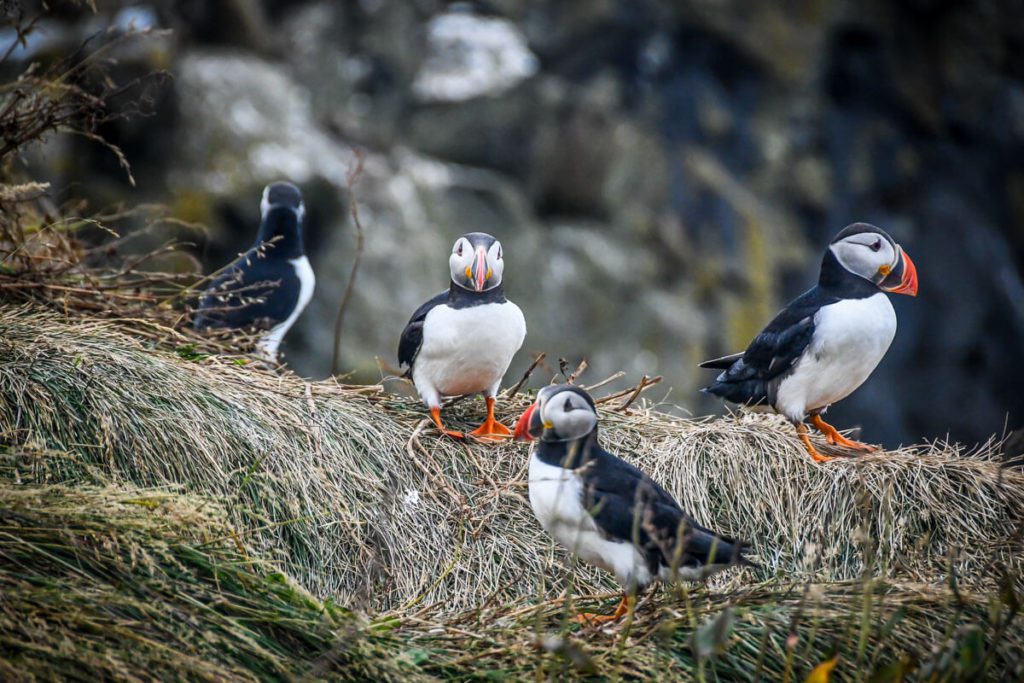
- Faxaflói bay – puffin viewing in May
- Jökulsárlón Glacier Lagoon and Diamond Beach
- Reynisfjara Black Sand Beach
- Dyrholaey – puffin spotting in May & summer
Best things to do during spring in Iceland
- Check out the sights on Iceland’s Golden Circle
- Fishing, whale watching and golf season begin
- Bird-watching, particularly for Iceland’s beloved puffins
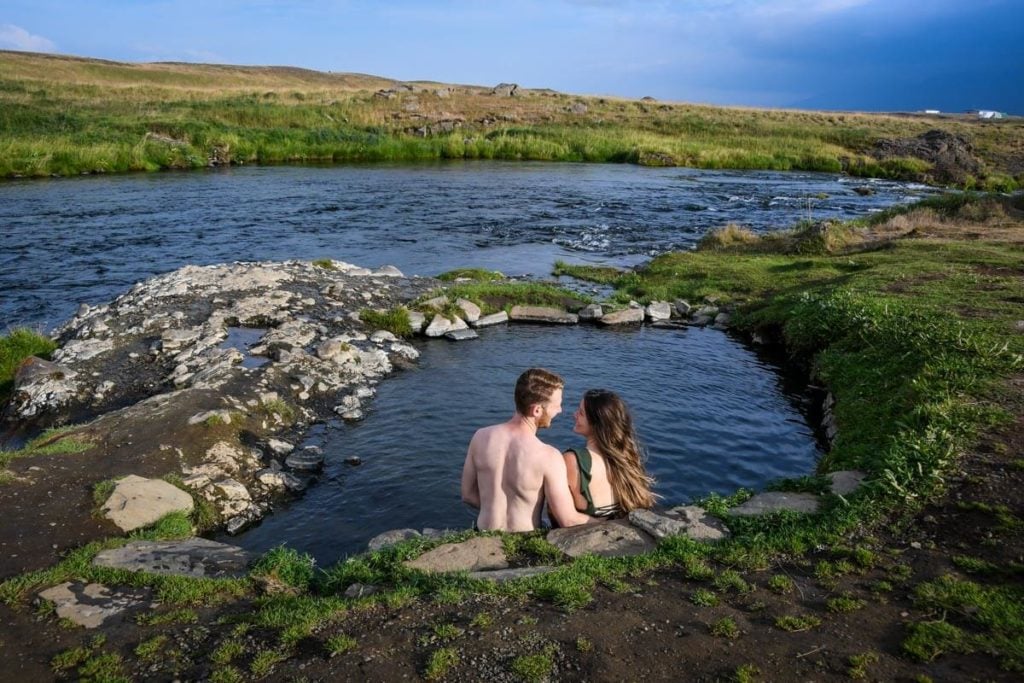
- Check out some of Iceland’s best hot springs
- Vaka Folk Festival – May in Reykjavík
- Aldrei For Eg Sudur music festival – April in Reykjavík
- Eve Fanfest – May in Reykjavík
Spring is the best time to visit Iceland if…
- …you want more “normal” daylight hours.
- …you want to do some bird watching.
- …you don’t mind a bit of unpredictable weather.
Psst! Once you’ve picked your travel dates, the next step is the route. Our 2-week Ring Road itinerary is designed for summer travel (June-September) and covers the full loop with realistic daily plans, top stops, and the hidden gems in between. Grab the Ring Road Itinerary!
What to pack for your trip to Iceland
Packing for a trip to Iceland is tough (the weather changes all the time!). But don’t worry, we’ve got you covered with a super detailed packing list so you know exactly what to bring.
In this free Iceland packing list PDF download, we’ve provided packing checklists for everything from clothing and toiletries (for both women and men!) to what shoes to pack and extra medicines you may want to have on-hand just in case.
Plus, we’re sharing tons of packing hacks and tips for traveling in Iceland that you won’t find anywhere else!

FAQs about visiting Iceland
Still have questions about the best time to visit Iceland? Wanna know more about what to expect in Iceland throughout the year? We’ve got all your questions answered here.
What’s the best weather app for Iceland?
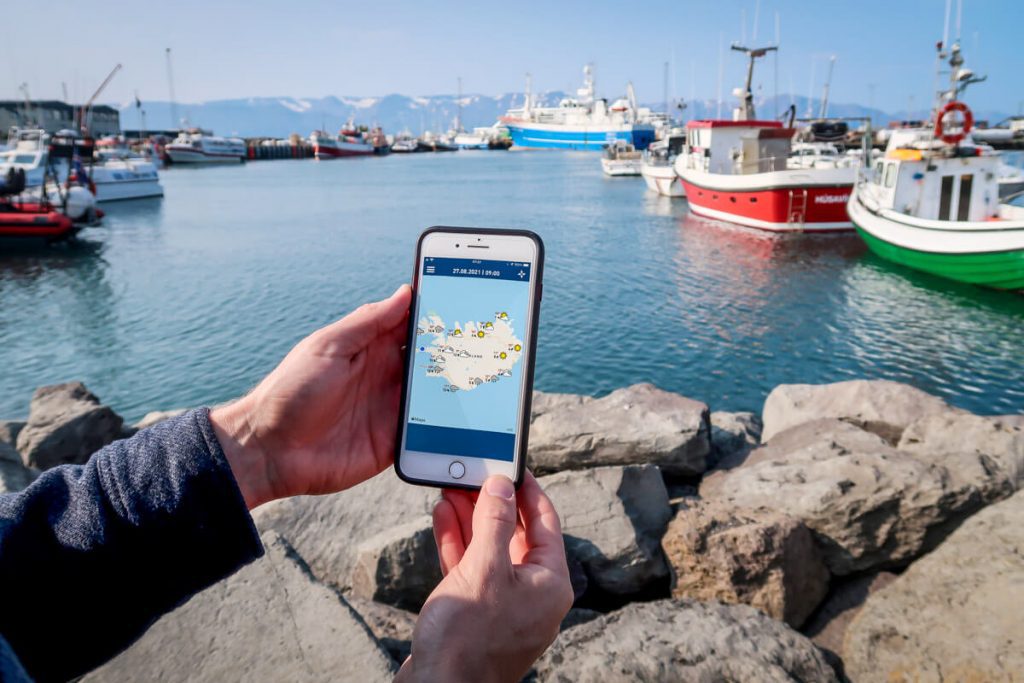
The best way to get the weather forecast is to install the Veður app. This is the only Iceland weather app directly tied to the Icelandic Meteorological Office. We found it to be way more accurate than Apple Weather for Iceland.
→ Find out what other Iceland travel apps we recommend downloading before your trip!
What’s the best month to see the Northern Lights in Iceland?
There are three essential factors that need to align in order to see the Northern Lights in Iceland: darkness, clear skies and a surge in solar activity. You can see the Northern Lights from late-August until May.
However, you’ll have the best chances of seeing the spectacular display of Northern Lights in Iceland during September and March, during the spring and autumn equinoxes when the skies are dark enough and geomagnetic activity is particularly high.
When can you see puffins in Iceland?
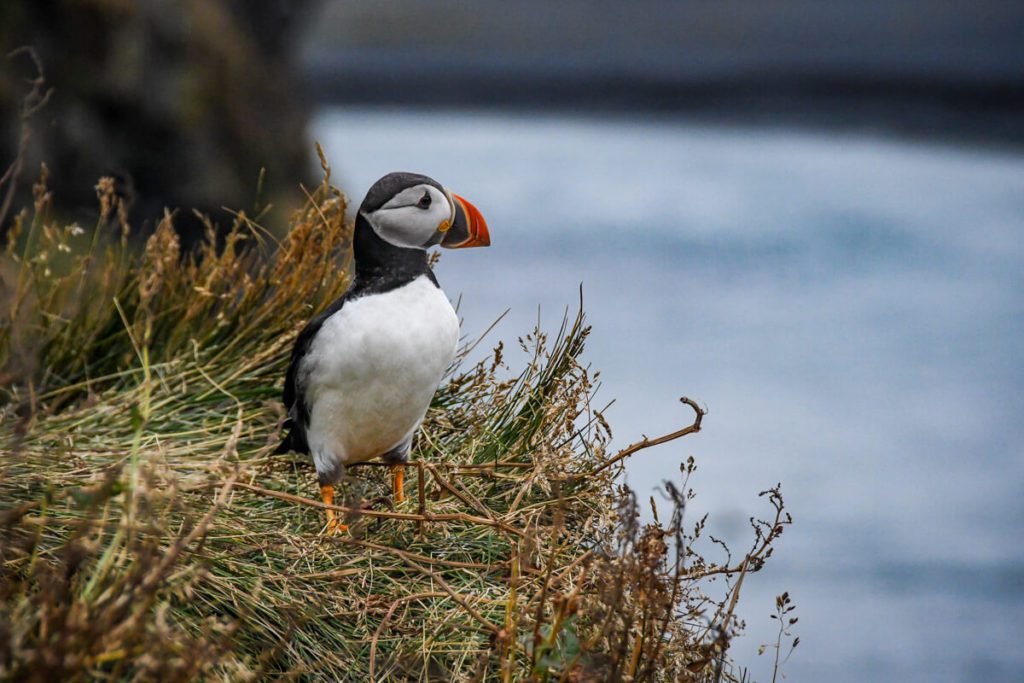
The best time to visit Iceland if you want to see the puffins is during the spring and summer months. These loveable little birds typically arrive in May and depart by the end of August.
The colonies are most active during the evenings, so it’s best to plan your visit to the cliffs of Dyrholaey or the black sand beach where they are known to nest, for evening time.
What is the best time for whale watching in Iceland?
June and July are the best months to visit Iceland for whale watching. The north enjoys visits from humpbacks, minkes and dolphins from May – August and a few humpbacks even stick around until the end of the year. Blue whales are spotted passing through in June.
What are some things you can do all year round in Iceland?
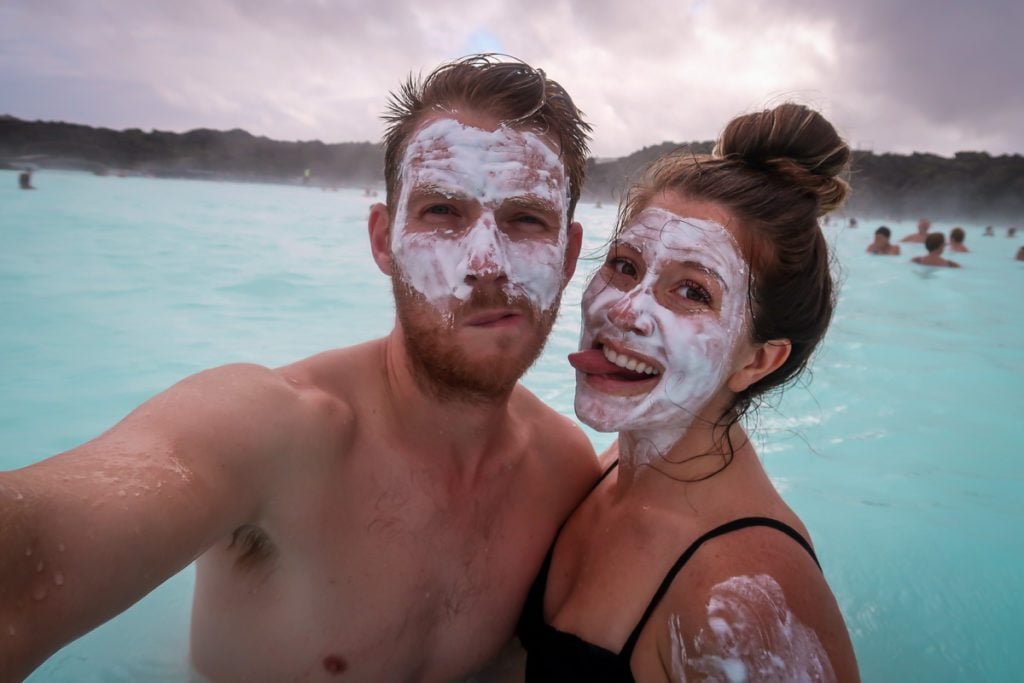
→ Want more ideas? Check out all the absolute best things to do in Iceland to start writing your bucket list.
What are F-roads and why do they matter?
An F-road is the term given to mountain roads in Iceland that are only accessible by 4×4 vehicle. These are similar to “fire roads” in the United States, leading you into the backcountry and to the start of some pretty epic hikes.
Like fire roads, they’re really not maintained at all. For this reason they require you to have a 4×4 vehicle to drive on them by law and are closed most of the year except for summer time, based on road conditions. You can check the current conditions here.
How many days do you need in Iceland?
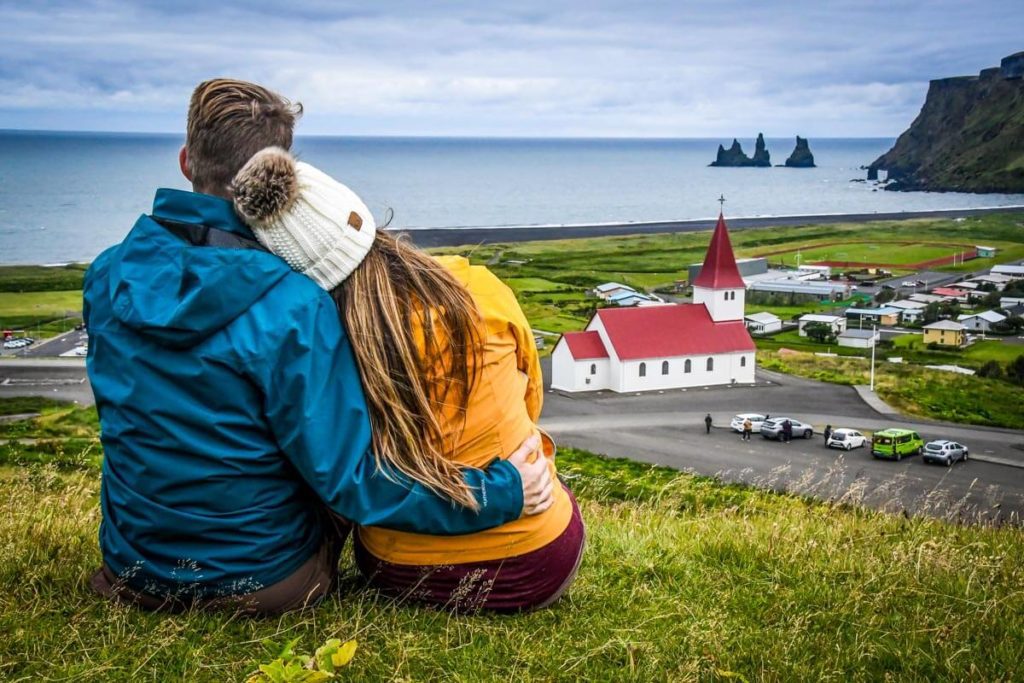
In order to get a good taste of all that Iceland has to offer, we’d suggest spending a minimum of one week in Iceland. If you happen to have more time than that, great! There is so much to see and do in this country you could spend months here and not get bored.
Is Iceland expensive?
In short, yes. Iceland is expensive and that fact is pretty much unavoidable.
Because most things have to be imported to this small island nation, prices are at a premium. Expect to pay a small fortune for accommodation, eating out is a luxury here, and don’t even get me started on what a gallon of gas costs!
Lucky for you, we’ve got you covered. We broke down exactly what we paid for everything in our Iceland budget article. Plus we included some sneaky budget tips you’ll want to read before planning your visit.
What is the cheapest time to visit Iceland?
Simply put, the cheapest time to visit Iceland is going to be during the off-season winter months. This means the best time to visit Iceland if you’re on a budget is October – early-December and January – April. (The holiday season in December sees a spike in tourism traffic in Iceland.)
Want your entire trip planned for you? 👇🏼
We planned the perfect Ring Road Route with all the bucket list spots + hidden gems, and we’ve given you tips on pacing, where to stay, and worthwhile places to eat.

It will save you SO MUCH TIME & ensure you don’t miss out on the best places in the country! Learn more & see reviews here!
In our opinion…
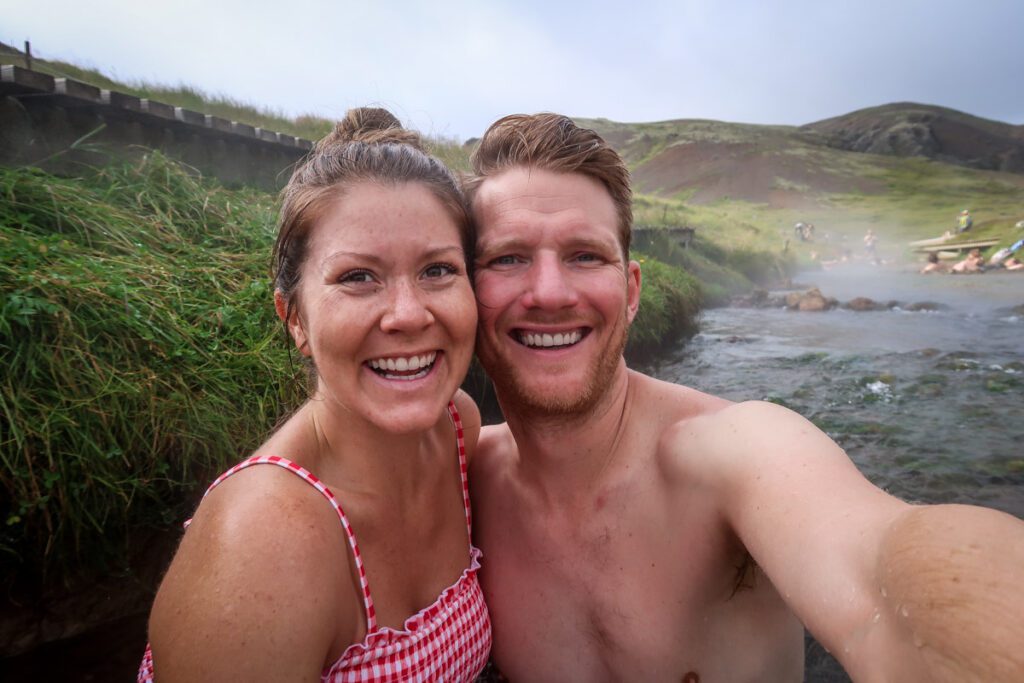
We’ve traveled to Iceland during the summer and winter month and found advantages to both seasons.
Since we are big on hiking and all the outdoor experiences, we’d recommend visiting Iceland during the summertime if you can swing it. This way you’ll have the most opportunities to experience the outdoors. Plus, Iceland isn’t typically as crowded, even during high season, as other European destinations.
Personally, we would not recommend planning a trip to Iceland just to see the Northern Lights. It’s really a matter of luck with the weather and ideal conditions. And there are other, less expensive places you can see the phenomenon.
We like to think of this as an added bonus if you get to see them.
Plan your trip to Iceland
We have TONS of resources on travel in Iceland and how to make the most out of your trip. Check out our Iceland Homepage for all the answers to your most burning questions, or read some of our favorite articles below.
- Check out all of our top recommendations for things to do in Iceland.
- Figure out thebest time to visit Iceland based on weather, crowds, and activities.
- Start with this 7-day Iceland itinerary if it’s your first time visiting.
- This step-by-step guide will help you plan an unforgettable Iceland road trip.
- You’ll want to keep this guide handy if you plan on driving Iceland’s Golden Circle.
- Bookmark these must-see stops along Iceland’s Ring Road before you hit the road.
- Read up on all the actually cool things to do in Reykjavik.
- Be sure to download these essential Iceland travel apps before your trip!
Want to upgrade your experience in Iceland?
We’ve created a fully interactive, custom map of Iceland that includes all of our personal recommendations, restaurants, hidden gems, viewpoints and unique stays.
Pair that with our done-for-you Iceland Ring Road Itinerary—so you can spend less time researching and more time soaking in Iceland’s epic landscapes.

This 14–day itinerary takes you along Iceland’s entire Ring Road, blending adventure with a touch of luxury. You’ll visit iconic sights like Skogafoss and Diamond Beach, plus off-the-beaten-path spots most tourists miss (like a hidden cave you can dine in by candle light!).
With detailed daily plans, insider tips, driving directions, and hand-picked stays, this guide takes the guesswork out of planning so you can experience Iceland stress-free.
Don’t miss your chance to grab our Iceland packing list!

Click the banner to download our complete packing list for Iceland! It’s packed with good suggestions and insider tips to help plan your Iceland trip.
And it’s completely FREE, so why not!?
Save this article on Pinterest for later!

We want to hear from you!
Are you planning a trip to Iceland sometime soon? When will you be traveling? Do you have any more questions you want answered?
Comment below and we’ll do our best to get back to you with the answers you need!

Katie Diederichs is the lead writer and co-founder of Two Wandering Soles, where she creates in-depth travel guides, itineraries, and tips designed to help readers plan better trips with confidence. With a background in journalism, photography, and design, she combines thorough research with firsthand experience to deliver clear, practical, and visually driven travel content. As the primary trip planner, Katie turns complex logistics into easy-to-follow advice travelers can actually use.